
The maritime industry is changing fast, and so is the way you will learn your job. This is not just about new gadgets or fancy buzzwords it is about whether you, as a junior engineer or cadet, will be truly ready for the ships you are going to sail on. Studies now suggest that several hundred thousand seafarers will need extra training by the mid-2030s just to keep up with new fuels, new systems, and decarbonization demands. If you are starting your career now, this change is not “for the future” it is for you.
Why Your Old Idea Of Training Is Too Small
You have probably grown up with a very familiar pattern: classroom lectures, some labs, a few simulator sessions, then “real learning” at sea when you start watchkeeping. Right now, most maritime training still looks like that physical classrooms, basic simulators, onboard drills, and a lot of “Watch how I do it and remember.”
But ships are no longer simple. You will see:
- New fuels like LNG, methanol, ammonia, and biofuels.
- Complex automation and digital control systems.
- Tougher rules on emissions, safety, and environmental protection.[3][1]
Traditional training alone cannot keep up with this pace. If the training does not evolve, the gap between what you learn in school and what you face on board will keep getting bigger.
AR And VR: Practicing Mistakes Before They Become Accidents
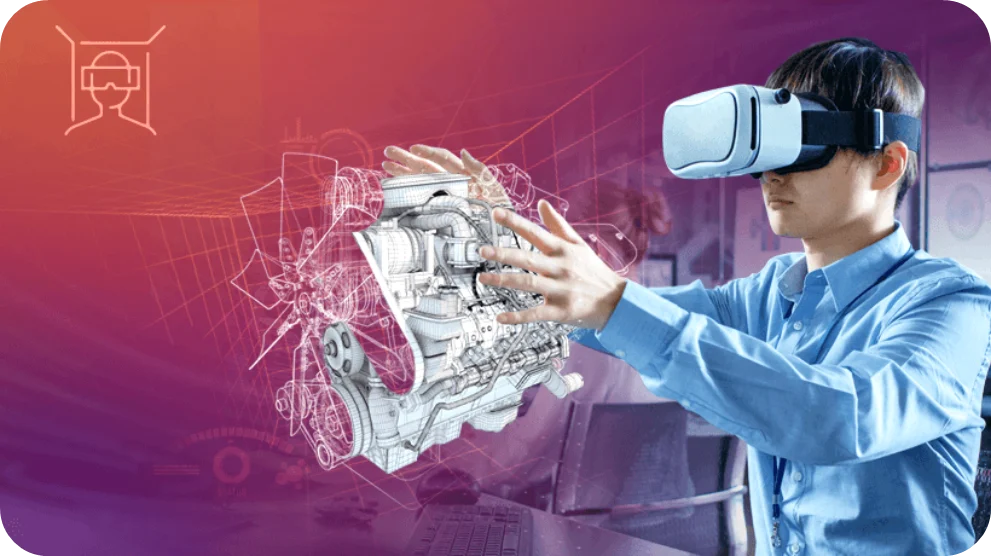
Imagine this: you are standing in a virtual engine room, facing a simulated fuel leak or crankcase fire. Your heart rate goes up a little, but you know that if you make a mistake here, nobody gets hurt. You repeat the scenario until your reactions become calm and controlled.
That is what AR (Augmented Reality) and VR (Virtual Reality) bring to maritime training.
From a Chief Engineer’s point of view, this is gold:
- You can safely make mistakes and learn from them before touching real machinery.
- You build muscle memory for rare but critical situations blackouts, fires, flooding, automation failures.
- You arrive on board already familiar with layouts, systems, and procedures, instead of being completely lost in your first week.
AR goes one step further. It can overlay instructions and warnings directly on what you are looking at valves, pumps, panels while a shore expert guides you through a job in real time. For a cadet or junior, that means you are never truly “alone” during a difficult task, even if you are the only trainee on board.
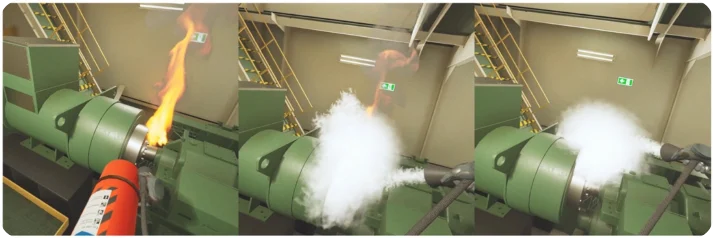
Fire extinguisher priming and subsequent use on a fire (successful fire extinguishment).
More Than Gadgets: Real Hands-On, Just In A Smarter Way
Research from organizations like DNV keeps repeating the same message: seafarers need better, more realistic, and more frequent hands-on training to handle the ships of tomorrow. That does not mean less practical work; it means better practical work.
Think of:
- Training centers with replica engine rooms and automation systems just like the ships you will sail on.
- Simulators that reflect the exact type of engine, fuel system, and control room you will see on board.
- VR/AR labs where you can rehearse critical jobs and emergency responses repeatedly before your first contract.
As a Chief, this allows proper mentoring: instead of just saying “Don’t do this, it is dangerous,” you can be taken through realistic, guided practice, where the worst outcome is a reset button not an incident report.
AI As Your Quiet Coach In The Background
Artificial Intelligence is slowly becoming another teacher in your career. Reports show the maritime AI and autonomy market is expected to reach around USD 5 billion by the end of this decade, driven by safety, efficiency, and environmental demands.
In training, AI can quietly help you in ways you may not notice at first:
- It can track how you perform in quizzes and simulations and then suggest more practice in your weak areas.
- It can make scenarios more realistic by adjusting difficulty when you do well, instead of letting you “memorize the script.”
- It can give instant feedback what you missed, what you did well, what you should improve without waiting for a busy instructor to find time.
E-learning portals and LMS platforms then store your courses, certificates, and performance data in one place. This helps both you and your company see your progress clearly, instead of relying only on “He seems to know his job.”
What This Means For You Standing In The Engine Room Today
All of this may sound big and distant, but the impact is very personal.
- The world expects shipping to be carbon-neutral by 2050, which means alternative fuels, new technologies, and stricter controls will be normal in your working life.
- Studies show hundreds of thousands of seafarers will need upskilling in decarbonization and digital skills in the coming decade.
- Companies will look for engineers who can handle both spanners and software those who can open up a purifier and also read a digital performance dashboard.
So, as your Chief Engineer, the message is simple:
- Do not be afraid of AR, VR, AI, or e-learning; use them as extra tools to protect yourself and your ship.
- Whenever you train onboard, online, or in a simulator always connect it back to real jobs: “Where will I see this on my next watch?”
- Treat learning as part of your daily routine, not as something that ends when your course certificate is printed.
If you do this, these new technologies will not replace good engineers they will help you become an even better one.