

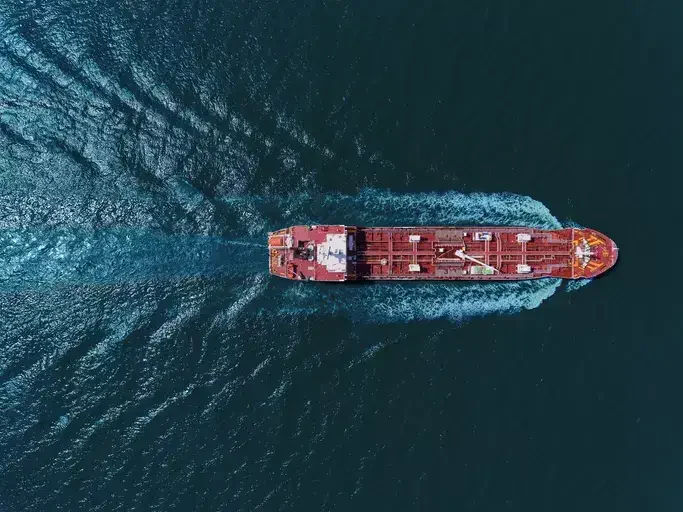
Squat is one of the most important hydrodynamic effects a navigating officer must understand when operating in shallow or restricted waters. It silently reduces under-keel clearance and increases the risk of grounding. Many incidents worldwide have occurred because squat was not properly calculated or was underestimated.
This blog explains squat in simple and practical terms, including formulas, examples, factors affecting it, and precautions for safe navigation.
What is Squat
Squat is the increase in draft of a ship when it moves through shallow or restricted waters. As the ship moves forward, water must accelerate under the hull to pass through a restricted area. This creates a low-pressure zone around the hull, causing the ship to sink deeper and sometimes trim. The faster the ship moves, the greater the squat.
Why Squat Happens
Bernoulli’s principle explains that when the flow of water accelerates under the hull, pressure decreases. This loss of pressure makes the ship settle deeper. The effect is stronger when the water depth is shallow or the channel is narrow.
When Squat Becomes Critical
Squat becomes dangerous when under-keel clearance is low, channels are narrow, speeds are high, or the vessel is deeply laden. The combination of these can reduce UKC faster than officers realise.
Types of Squat
- Bodily Sinkage
The entire ship sinks down vertically without much trim. - Trim by Bow or Trim by Stern
The ship trims when pressure distribution changes along the length. Fine bows tend to experience bow squat, while fuller sterns experience stern squat.
Factors Affecting Squat
- Speed Through Water
The most important factor. Squat increases roughly with the square of the vessel’s speed. Halving speed reduces squat by nearly seventy five percent. - Under-Keel Clearance
Less UKC increases water flow acceleration and increases squat. - Block Coefficient
Fuller ships with higher block coefficients experience higher squat. - Water Depth and Depth Froude Number
Shallow water increases squat significantly. - Channel Width and Bank Effect
Narrow channels cause bank suction and increase squat. - Ship Length and Beam
Longer and wider vessels influence flow pattern and increase the squat effect in restricted waters.
Standard Formulas for Squat Calculation
Different ports and pilots use different methods. The following are commonly accepted empirical formulas.
- Open Water Formula
Squat in metres = Cb × (V squared) / 100
Where Cb is block coefficient and V is speed in knots. - Confined Water Formula
Squat in metres = 2 × Cb × (V squared) / 100 - UK Ports Formula
Squat at bow (metres) = Cb × (V squared) / 50
This usually gives a higher and safer value.
Example Calculation
A Capesize bulk carrier has:
Block coefficient = 0.82
Speed through water = 10 knots
Area = confined water
Squat = 2 × 0.82 × (10 squared) / 100
Squat = 2 × 0.82 × 100 / 100
Squat = 1.64 metres
This means the vessel will sink by 1.64 metres due to squat at this speed. If UKC was already low, this becomes dangerous.
Typical Squat Values Observed
These are approximate real-world values used for quick estimation.
At 6 knots: 0.3 to 0.5 metres
At 8 knots: 0.7 to 1.0 metres
At 10 knots: 1.2 to 1.8 metres
At 12 knots: 2.0 to 2.8 metres
These values vary depending on ship type and channel geometry.
How to Reduce Squat
- Reduce speed. This is the most effective method.
- Increase UKC where possible.
- Avoid shallow water when loaded.
- Navigate near the centreline of the channel.
- Follow pilot instructions and port guidelines.
- Monitor echo sounder continuously.
- Keep engines ready for immediate manoeuvring.
UKC Planning and Squat Allowance
UKC must always include squat allowance. Many ports specify values such as:
Open sea UKC: Ten percent of draft
Harbour UKC: Fifteen percent of draft
Restricted channel UKC: Minimum one metre plus squat
Always check the passage plan and local regulations.
A typical UKC calculation includes:
Static draft
Dynamic draft change
Squat
Wave response
Heel and trim effects
Tide height
Squat must never be ignored in the final UKC figure.
Squat and Trim Interaction
On vessels with fine bows, most squat appears forward. On vessels with fuller sterns, stern squat becomes significant. Excessive bow squat may cause bow wave to rise and risk touching uncharted shoals. Stern squat affects propeller immersion and steering.
Squat in Rivers and Dredged Channels
Shallow rivers and dredged channels have the highest squat risk because:
Water depth changes frequently
Silt reduces actual depth
Bank suction alters flow pattern
Speed is often higher due to current
Ships must maintain low speed, use mid-channel, and closely follow pilot instructions.
Practical Bridge Techniques to Manage Squat
- Maintain minimum safe speed consistent with control.
- Use echo sounder continuously.
- Monitor speed through water, not speed over ground.
- Allow extra margin during high fresh water flow or silted areas.
- Keep engines ready and avoid large course alterations.
- Brief the entire bridge team before entering shallow waters.
- Record squat values and echo sounder trends in the log.
Common Mistakes Officers Make
Underestimating squat
Using speed over ground instead of speed through water
Ignoring trim effect
Not updating tide information
Relying only on charted depth
Not considering siltation in ports and rivers
Not reducing speed early enough
Real Situations Where Squat Causes Trouble
- Groundings during river transits
- Touching bottom during approach to coal terminals
- Loss of steering due to shallow water effect
- Propeller ventilation causing loss of control
Every one of these cases is preventable with proper squat calculation and speed management.
Quick Squat Estimation Rule for Bridge Use
For bulk carriers with block coefficient around 0.80:
At 6 knots, squat is roughly 0.4 metres
At 8 knots, squat is roughly 0.8 metres
At 10 knots, squat is roughly 1.6 metres
At 12 knots, squat is roughly 2.4 metres
This thumb rule helps during pilotage and tight situations.
Conclusion
Squat calculation is one of the simplest yet most critical aspects of safe navigation in shallow waters. Understanding how speed, depth, and hull shape influence squat helps officers make better decisions on the bridge. Always calculate squat during passage planning, include it in UKC assessment, and continuously monitor speed through water and echo sounder trends when navigating in restricted waters.