Ship Fin-Stabilizer and Its Operation

When you’re out at sea, stability is everything. A rolling ship is not just uncomfortable—it can be dangerous for both crew and cargo. That’s where fin stabilizers come into play. These clever devices, located below the waterline on both sides of the hull, help reduce the ship’s rolling motion and make your journey smoother and […]

How to Start an Emergency Generator on a Ship

What Is an Emergency Generator? An emergency generator is a backup power system installed on every ship. When the main generators fail — due to blackout, machinery fault, or casualty — this generator kicks in automatically to provide power to critical systems. It’s placed in a separate space away from the engine room, usually higher […]

Maintenance of Emergency Generator

Why the Emergency Generator Matters Imagine you’re out at sea. It’s night. The main power fails. Radar dies, lights go out, the steering is lost—everything suddenly comes to a standstill. Now ask yourself—what’s the one thing standing between your ship and disaster? That’s right: the Emergency Generator. This small but powerful backup system is what […]

What Exactly is an Emergency Towing Booklet?

The Emergency Towing Booklet (ETB) is a mandatory, ship-specific manual which describes how a vessel can safely be towed from both forward and aft in case of a breakdown, collision, or loss of manoeuvrability. It is not just a “theoretical” booklet; it should be a practical guide for the crew during an actual emergency. The […]

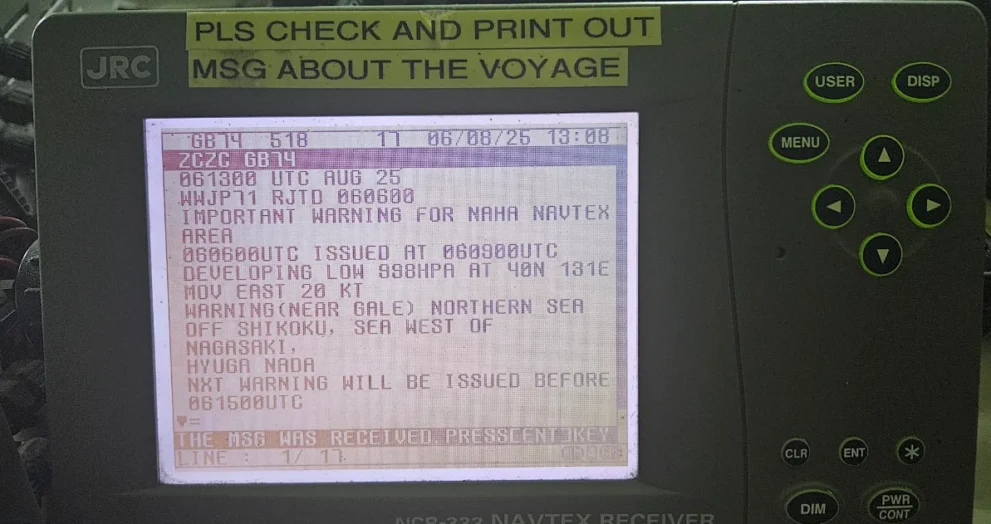
NAVTEX Explained: Navtex Coverage, Navtex Use, Navtex Channels- What Every Seafarer Must Know

Real-time information becomes your most powerful ally when you are out at sea, disconnected from the rest of the world. That is where NAVTEX steps in. If you are a deck officer, junior cadet, or even a ship enthusiast trying to understand maritime communication systems, this blog is your one-stop guide to what NAVTEX is, […]

Stopping the Diesel Generator at Sea

Stopping the Diesel Generator at Sea When something goes wrong, recognizing it in time and shutting the generator down without delay can be the difference between safety and disaster. But here’s the catch: not every situation screams “danger” outright. Sometimes it’s just a faint knock, a whisper of smoke, or a number flickering on the […]

Generator Synchronization on Ships

Generator Synchronization on Ships Onboard a ship, uninterrupted power isn’t a luxury — it’s a necessity. From the bridge to the engine room, everything relies on a stable electrical supply. That’s where synchronized generators step in. Whether we’re switching between engines or sharing the load, synchronization is the unsung hero keeping everything running smoothly. Let’s […]

Types of Marine Oily Water Separators

Types of Marine Oily Water Separators – Explained Simply let’s talk about the different types of OWS you’ll come across onboard. 1. Gravity-Based Oily Water Separators Simple in design, reliable in performance. This is the most old-school type—based on the basic principle that oil floats on water. Bilge water enters a tank or chamber and […]

Oily Water Separator (OWS): Construction & Working

Oily Water Separator (OWS): Construction and Working  Why Do We Need an OWS Onboard? Modern ships generate bilge water during normal operation—water that is contaminated with oil, fuel, lubricants, and cleaning agents from machinery spaces. Simply pumping this overboard is illegal and environmentally disastrous. Enter the oily water separator. Its primary function is to separate […]

Maintenance of Oily Water Separator (OWS)

Maintenance of Oily Water Separator (OWS) when the OWS fails, the consequences can be serious. Not just for the ship, but for your licence, your freedom, and your reputation. So, instead of waiting for alarms and PSC surprises, here are 7 practical  tips to help keep your oily water separator running smoothly.  1. Understand What […]