

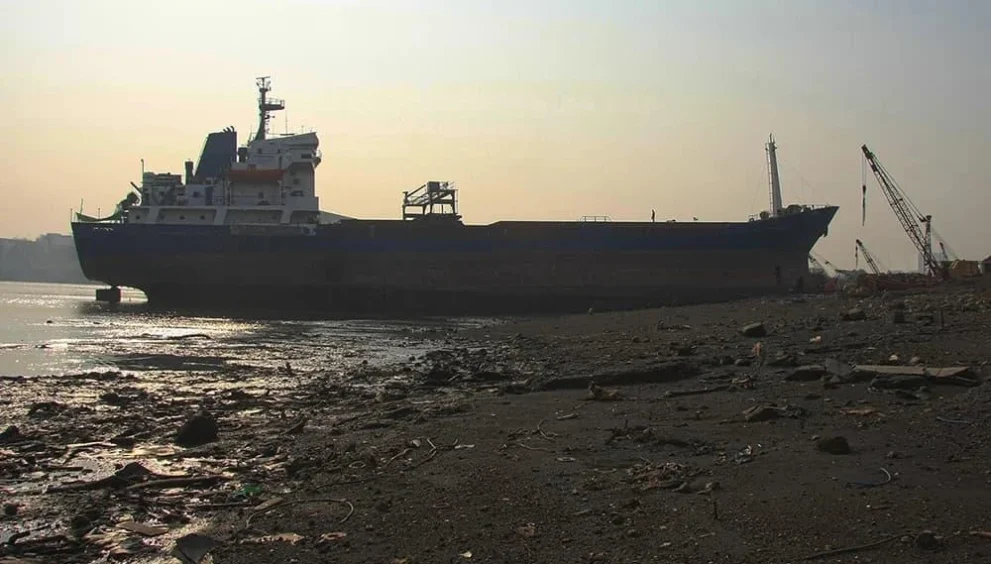
Beaching of a ship is the deliberate action of grounding a vessel onto a beach, shallow water, sandbank, or gently sloping shore. It is done in a controlled and planned manner, unlike accidental grounding. Beaching has been practiced for centuries and remains relevant today in specific operations such as salvage, emergency situations, ship recycling, and repairs in remote locations. Below is a complete, detailed, practical blog written in simple maritime English without any blank lines.
What Is Beaching of a Ship?
Beaching means intentionally driving a vessel onto a suitable stretch of land or shallow seabed. The goal is to make the hull sit firmly on the ground so that the ship remains stable when the tide falls. It is done under controlled power, usually during high tide, to ensure a safe settling of the vessel as water recedes.
Why Is Beaching Done? (Purposes)
Beaching is carried out for several operational, commercial, and emergency reasons:
1. Salvage Operations: When a vessel is sinking, damaged, or taking in water, beaching helps prevent total loss by keeping it from settling in deeper waters.
2. Emergency Situations: Fire, flooding, engine failure, hull breach, or risk of capsizing may require immediate beaching to save life, cargo, or the ship.
3. Repairs and Maintenance: In remote areas without dry docks, shallow-water repairs can be done when the tide goes out.
4. Ship Recycling: At places like Alang in India or Chittagong in Bangladesh, beaching is used to bring end-of-life ships ashore for dismantling.
5. Cargo Operations: Some small craft or landing ships beach to load/unload cargo or military equipment.
Where Is Beaching Carried Out?
A proper beaching location must have specific characteristics:
• Gently sloping seabed
• Soft bottom – sand, mud, clay
• Sufficient tidal range for refloating (if required)
• No rocks, coral reefs, wrecks, or obstructions
• Adequate sea room, minimal swell, and safe approach route
Authorities commonly pre-approve beaching areas for salvage or recycling operations.
How Is Beaching Planned? (Step-by-Step Approach)
Beaching must be planned exactly like a navigational maneuver.
1. Assessment of Situation:
• Condition of the vessel
• Nature of emergency (if applicable)
• Weather, tides, currents, and sea state
• Available propulsion and steering capability
• Proximity to suitable beaching grounds
2. Choosing the Beaching Spot:
The Master, pilot (if available), and salvage team select a stretch with safe gradient and adequate depth for approach.
3. Tide and Draft Calculations:
Beaching is ideally performed at high tide so the ship settles gently as tide falls. Understanding rise/fall of tide, under-keel clearance, and squat is essential.
4. Preparing the Vessel:
• Ballast adjustments for optimum trim
• Securing all loose items
• Closing watertight doors, ports, hatches
• Checking propulsion readiness
• Informing engine room, bridge team, and deck crew
• Preparing anchors for immediate deployment
5. Approach to the Beach:
The ship approaches slowly, aligned perpendicular or at a slight angle (depending on conditions). Engines are kept at controlled speed.
6. Final Touchdown:
When the hull touches bottom, engines are used carefully to push the ship slightly further to ensure stable positioning. Anchors may be dropped to hold the vessel.
7. After Beaching:
• Sound tanks and bilges
• Check stresses on the hull
• Conduct internal inspections
• Monitor weather and tide
• Begin salvage, cargo, or repair operations as planned
Risks Associated with Beaching
Beaching, although controlled, carries several risks:
• Structural damage to hull or bottom plating
• Loss of stability if beach gradient is uneven
• Failure to refloat if tide is insufficient
• Heavy stresses on forepeak and bottom structure
• Environmental damage to the coastline
• Pollution risk from fuel or cargo leakage
• Crew safety hazards during grounding
Proper risk assessment and expert involvement are essential.
How Is Refloating Done After Beaching?
If the intention is not scrapping, the ship must be refloated safely.
Steps include:
• Waiting for next high tide
• Deballasting or transferring weights to reduce draft
• Using tug assistance
• Employing ground tackle, kedging, or anchoring to pull off
• Using salvage pumps or patching leaks if hull is damaged
Refloating must be carefully monitored; improper attempts may cause hull bending or cracking.
Beaching vs. Grounding Key Difference
Beaching is intentional, planned, and controlled. Grounding is accidental and unplanned, often leading to damage, emergencies, and environmental incidents.
Historical Use of Beaching
Beaching has been used for thousands of years:
• Ancient wooden ships were beached for repairs, cleaning, and storage.
• Viking ships and Greek triremes regularly beached at night.
• Modern amphibious landing crafts use beaching for troop deployment.
The practice continues today, especially in salvage and shipbreaking.
Beaching in the Ship Recycling Industry
In places like Alang (India), Chittagong (Bangladesh), and Gadani (Pakistan), beaching is the main method where huge ships are driven full-speed at high tide onto a sloping beach. Once the tide falls, dismantling begins.
While debated for environmental reasons, it is still the most commonly used method in South Asia due to natural geography and cost effectiveness.
Responsibilities of the Ship’s Master
The Master is fully responsible for:
• Choosing the beaching location
• Ensuring safety of crew
• Ensuring the maneuver is safe and justified
• Coordinating with salvage authority or recycling yard
• Overseeing refloating (if applicable)
Proper documentation, log entries, and reporting are also mandatory.
Conclusion
Beaching of a ship is a high-risk but extremely valuable maneuver when executed correctly. Whether for emergency survival, salvage, repairs, or dismantling, it requires strong navigational judgment, understanding of tides and seabed characteristics, and close coordination between deck, engine, and external authorities. When done with proper planning, beaching can save lives, protect the vessel, and minimise environmental impact while ensuring operational success.