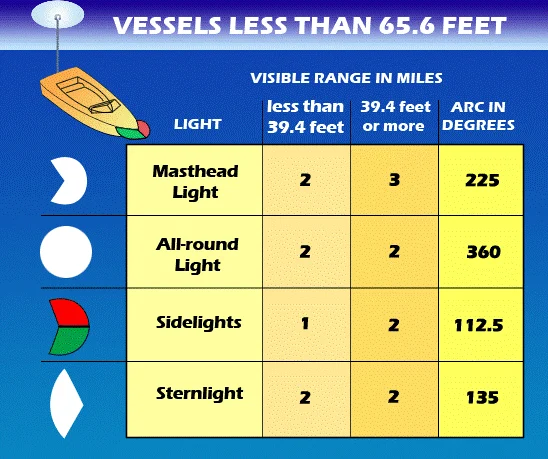

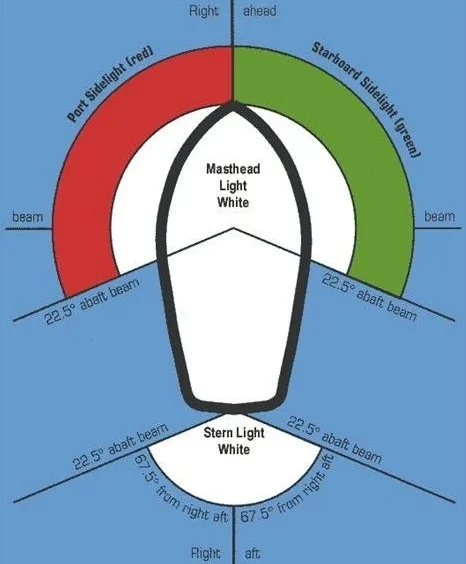
Red and green navigation lights are essential safety features that indicate a ship’s direction and prevent collisions at sea, as required under international maritime rules. From a ship captain’s perspective, mentoring juniors and cadets about the correct understanding and use of these lights is critical for nurturing watchkeeping competence and professional responsibility.
Why Red and Green Lights Matter
Red navigation lights are always on the port (left) side of a vessel, while green lights are on the starboard (right) side. This arrangement is not accidental but is based on science: red light travels farther in fog and low visibility, while green is brighter and easier to spot from a distance, aiding quick vessel identification.
Corelation with ROR and COLREGs
The International Regulations for Preventing Collisions at Sea (COLREGs), particularly Rules 20-31, make it mandatory for all ships to display navigation lights between sunset and sunrise, or in conditions of restricted visibility. Rule 23 specifies their use by various types of vessels. When approaching another ship, these lights convey vital information about who should give way. If you see a red light, you are looking at the other vessel’s port side and are required to give way; if you see green, you are to stand on, maintaining your course and speed.
- Rule 20: Application – Navigation lights must be displayed in all weather conditions from sunset to sunrise, and in low-visibility situations.
- Rule 23: Power-driven vessels underway – Must display sidelights (red/green), a masthead light, and a stern light.
- Rule 27: Vessels not under command or restricted in their ability to maneuver – Specifies additional signals.
Rule 34: Maneuvering and warning signals related to vessel navigation, including light signals
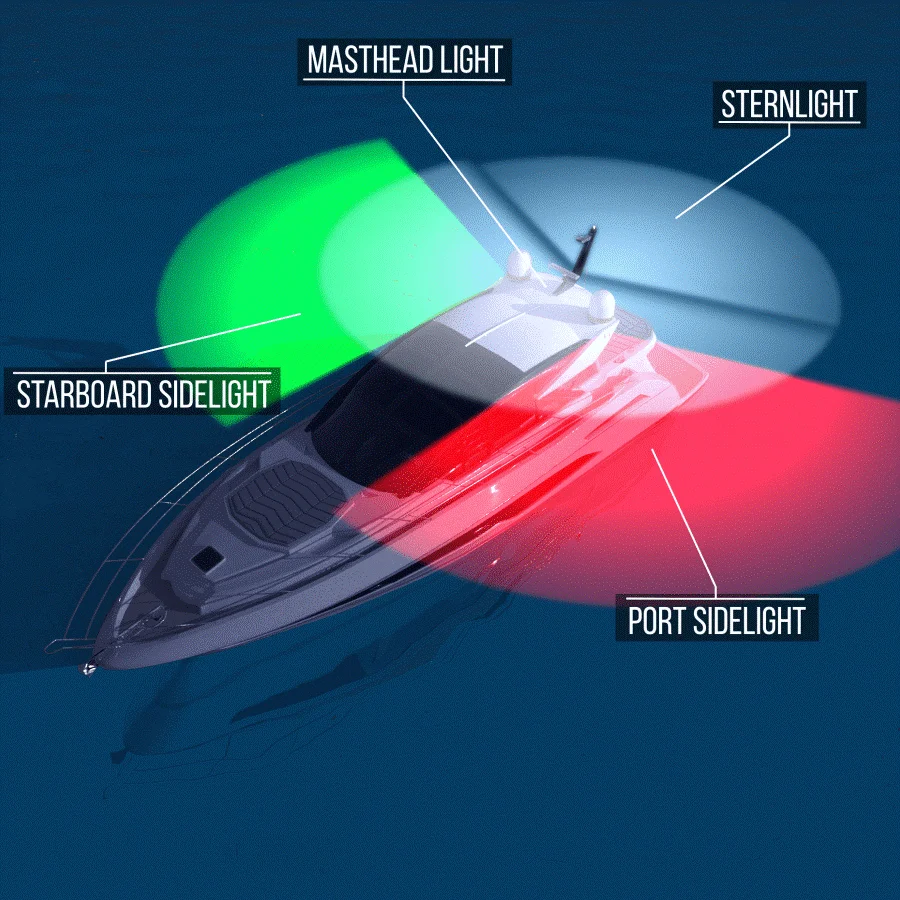
Mentorship means imparting the “why” behind procedures. As a ship’s captain, in still this in every junior officer and cadet: The proper display and recognition of navigation lights is fundamental seamanship. It’s not just compliance – it’s a lifesaving protocol woven into our professional DNA. Ignoring them or taking shortcuts is inexcusable and endangers everyone onboard and at sea.
- If you see a ship’s red light crossing your path at night or in the fog, you must act to avoid a collision.
- If you see green, maintain your course but be vigilant.
- Seeing both means you are on a head-on course, and both ships must alter course to starboard per COLREGs.
The use of red and green navigation lights has been standard since the early 19th century and is now enshrined in maritime law globally. Adhering to these rules has kept millions of seafarers safe and continues to be the backbone of collision avoidance on the world’s oceans.