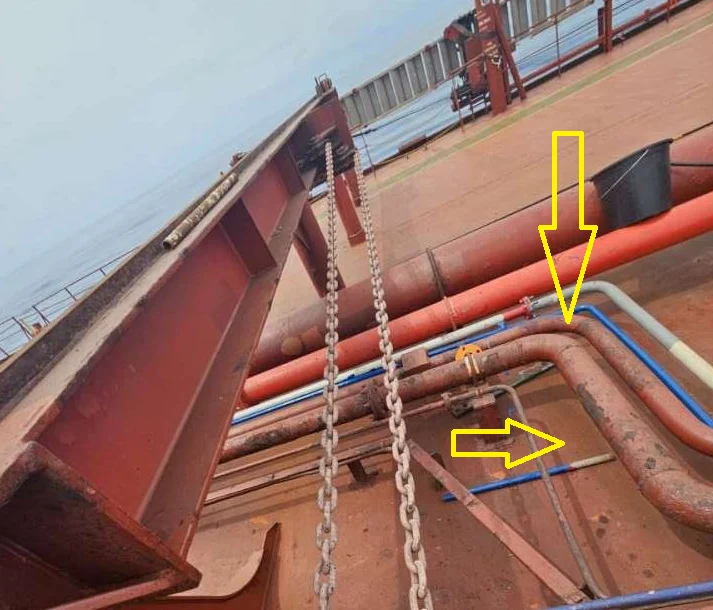

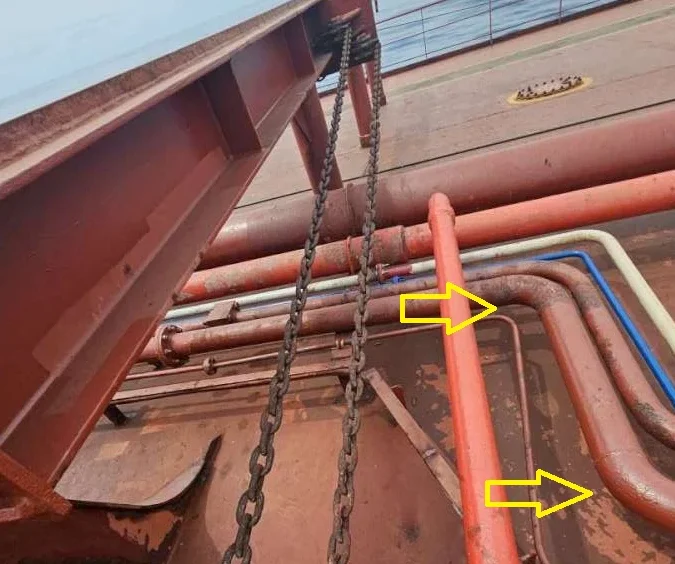
Ever wondered why ship pipelines are never straight? Learn the engineering reasons for bent pipelines on ships, from thermal expansion, vibration, and protection against water hammer to safety and space management.
- Introduction: The Ship Pipelines’ Story That Lies Behind
Enter any ship engine room and you are likely to notice something rather curious: no pipeline ever follows an absolutely straight course. Instead, pipes bend, curve, and snake around machinery. This isn’t poor workmanship – it’s intentional engineering.
For the cadets and junior officers, it is important to learn why the pipelines are bent. The reason is not only to fit in a tight engine room, but it is a matter of safety, durability, and efficiency at sea.
- The Primary Reason: Thermal Expansion & Contraction
Pipes will heat up and expand if hot fluids, such as steam, fuel oil, or lubricating oil, pass through them.
A straight rigid pipe would push against flanges and joints, leading to cracks or gasket failures.
The bends act like springs and absorb the expansion, protecting the system.
That’s why you’ll see expansion loops or U-bends in steam lines.
- Vibration & Hull Movement Control
Ships are dynamic: engines vibrate, hulls flex, seas roll.
Straight pipelines would become rigid stress points.
Bends help disperse vibration and flex with ship’s movement, preventing fatigue cracks.
On long voyages, this flexibility prevents costly leaks and breakdowns.
- Water Hammer Prevention
Water hammer refers to the sudden surge of pressure when a valve shuts or a pump stops abruptly.
In a straight pipe this shock travels violently and causes equipment damage.
In bends, the surge in pressure is absorbed gradually, hence reducing the risk of damage.
- Space & Accessibility in Engine Rooms
Engine rooms are compact and crowded. Straight pipes would
Block access to ladders, gauges, and valves.
Interfere with other machinery.
Create unsafe working conditions.
Bending pipelines allow the pipelines to be routed along bulkheads, ceilings, and corners — keeping critical walkways clear.
- Safer Maintenance & Operations
Pipeline bends allow:
Position valves and flanges at heights easily accessible to humans.
Easier dismantling during overhauls.
Safer access in emergencies instead of hidden or awkwardly placed joints.
- Examples from Real Ships
Fuel Oil Line: Bends between bunker tanks and settling tanks absorb expansion and vibration from pumps.
Steam Lines: Large U-bends serving as expansion loops to handle extreme heat changes.
Hydraulic Lines: Routed with bends to reduce vibration cracks from the steering gear system.
- Common PSC Deficiencies in Ship Piping
PSC frequently inspect piping systems. Some common deficiencies found in piping systems include:
Poor expansion allowance causing pipes to crack or leak.
Rigid pipelines without bends (high risk of failure).
Unsupported bends that cause sagging:
Poor repairs, such as welding small patch plates on pressurized pipes.
A well-bent and supported pipe system does not have such drawbacks.
- Cadet & Officer FAQ
Q1: Why are pipelines on ships never straight?
Because the bends allow flexibility to absorb heat expansion, vibration, and ship movement.
Q2: What is an expansion loop?
A U-shaped bend in a pipeline which allows it to expand/contract safely.
Q3: What happens if pipelines are kept straight?
They can crack, leak, or fail under stress, particularly in long voyages.
Q4: Are arched pipelines only used for ships?
No – power plants, refineries, and industrial plants use bent pipelines too, but the ships need them even more because of the constant motion on the sea.
Conclusion
Offset pipes on vessels are more than just ingenious engineering; they are lifesavers in the ocean. They absorb expansion, dampen vibration, prevent water hammer, save space, and make maintenance safer. First-time cadets, step into the engine room; remember that every bend has a reason behind its existence. They are the silent protectors of the ship’s machinery to ensure smooth and safe voyages