
A Fire Nobody Saw Coming
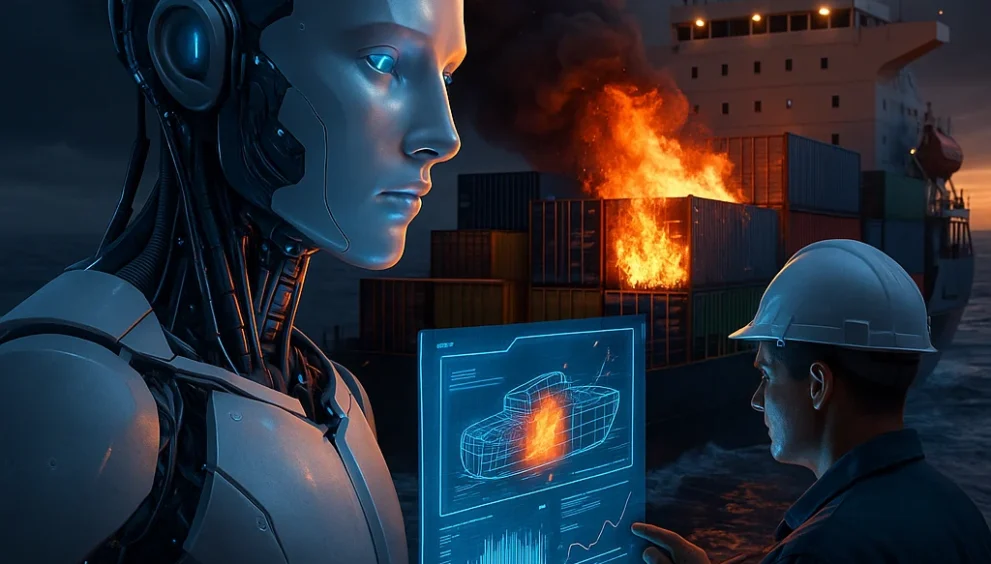
It’s 0200 hours, mid-ocean, calm seas. The OOW notices faint smoke near a container stack. Within minutes, alarms scream. Crew rushes to fight flames that spread faster than anyone expected. The fire eats through containers, threatening lives, cargo worth millions, and the ship itself.
If you’ve sailed on container ships, you know this is no exaggeration. Cargo fires are among the biggest threats at sea today. They’re sudden, devastating, and often linked to mis declared or dangerous goods.
Now, there’s a buzz: can artificial intelligence help prevent such disasters? AI is already diagnosing diseases, driving cars, even predicting weather. But can it protect a ship from a fire that begins inside a sealed container, thousands of miles from land?
Why Cargo Fires Are So Deadly
Let’s break it down:
- Hidden Hazards – Lithium batteries, chemicals, mis declared cargo. One spark is enough.
- Detection Delay – Fires often start deep inside containers, invisible until it’s too late.
- Limited Access – Fighting a fire at sea is nothing like ashore. No fire brigade, no easy escape.
- Chain Reaction – One container ignites, others follow. In hours, a vessel can be crippled.
We’ve seen major casualties in recent years: Maersk Honam (2018), MSC Daniela (2017), X-Press Pearl (2021). Each one cost lives, cargo, and hundreds of millions in losses.
The AI Promise: Eyes Where Humans Can’t See
So where does AI come in? Think of it as a super-watchkeeper — a system that never sleeps, never misses a detail. Here’s what’s being developed:
- Cargo Screening with AI
Before loading, AI can scan bills of lading, container data, and shipping patterns to flag suspicious or high-risk cargo.
Example: If a consignment of “electronics” comes from a shipper with a history of misdeclaration, AI can flag it for inspection. - Smart Sensors & Early Detection
AI-enhanced thermal cameras and gas detectors can monitor container stacks continuously. Subtle changes — heat build-up, unusual gas release — are detected long before human’s notice. - Real-Time Risk Analysis
AI systems can combine weather data, cargo type, and vessel stability to predict fire risk levels in real time. Think of it as a fire “radar” onboard. - Decision Support in Emergencies
In case of fire, AI can suggest containment strategies: which stacks to isolate, how to optimise water spray, when to seal holds.
But Can We Trust it?
Here’s where we need to pause. AI is no magic wand. Mariners know systems fail — GPS glitches, ECDIS freezes, sensors give false alarms. AI is no different.
- Garbage In, Garbage Out – If data (like cargo declarations) is wrong, AI may still miss hazards.
- False Alarms – Too many false positives, and crew will start ignoring warnings.
- Cost & Integration – Installing advanced AI systems isn’t cheap, and not every operator is willing to pay until regulators demand it.
- Cyber Risk – Imagine if hackers tamper with AI detection systems. The risk is real.
So, while AI brings promise, it’s not fool proof. It should be seen as an aid, not a replacement, for human vigilance.
The Human Element Remains
Every mariner knows: when fire breaks out, it’s humans who fight it. AI may sound alarms, analyse risks, even suggest strategies. But at the end of the day, it’s the crew in fire suits, with hoses and extinguishers, who face the flames.
That’s why training, drills, and experience will remain as important as ever. AI can enhance, but not replace, seamanship.
The Way Forward
Where does this leave us? Probably somewhere in between fear and hope.
- Regulators (IMO, Flag States) are already watching closely. Don’t be surprised if AI-based cargo risk screening becomes mandatory in the future.
- Shipowners will weigh cost vs benefit. But one catastrophic fire can bankrupt a company — prevention is cheaper than disaster.
- Mariners must prepare for a new reality: sailing with AI systems onboard, learning to trust them without over-relying.
Closing Thoughts
Cargo fires are not going away. In fact, with more dangerous cargoes and tighter schedules, the risk is growing.
AI aims to modernise our safety systems. Both are signs that shipping is entering a new era — faster, tougher, and more unforgiving.
As mariners, we must be ready to adapt. AI may give us better tools, but our responsibility remains the same: protect the ship, the cargo, and above all, the lives onboard.
Because when ships burn, it’s not AI that grabs the hose — it’s us.