
A Lifesaving System Every Officer Must Understand
On a bulk carrier, the biggest threat is not always fire or collision. Sometimes, danger creeps in silently, below the cargo, in the form of water entering where it should never be. That is where the Water Ingress Alarm Panel comes into play. It is a quiet sentinel standing guard round the clock, watching for signs of flooding in the most vulnerable areas of the ship.
Let us understand this system properly.
What is the Water Ingress Alarm Panel
The Water Ingress Alarm Panel is a specialized monitoring system positioned on the bridge that will detect and notify the duty officer about water entering specific compartments in the vessel. This panel, on a bulk carrier, is particularly important due to the cargo hold arrangements and double bottom tanks.
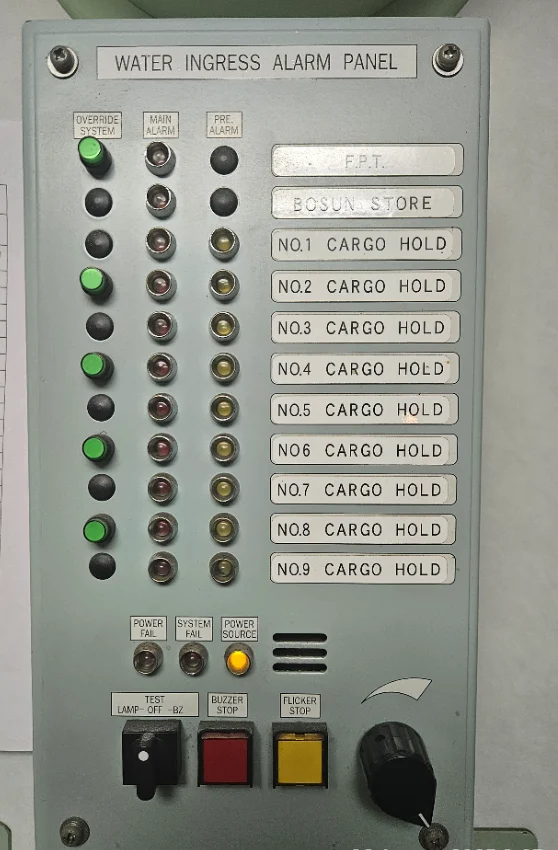
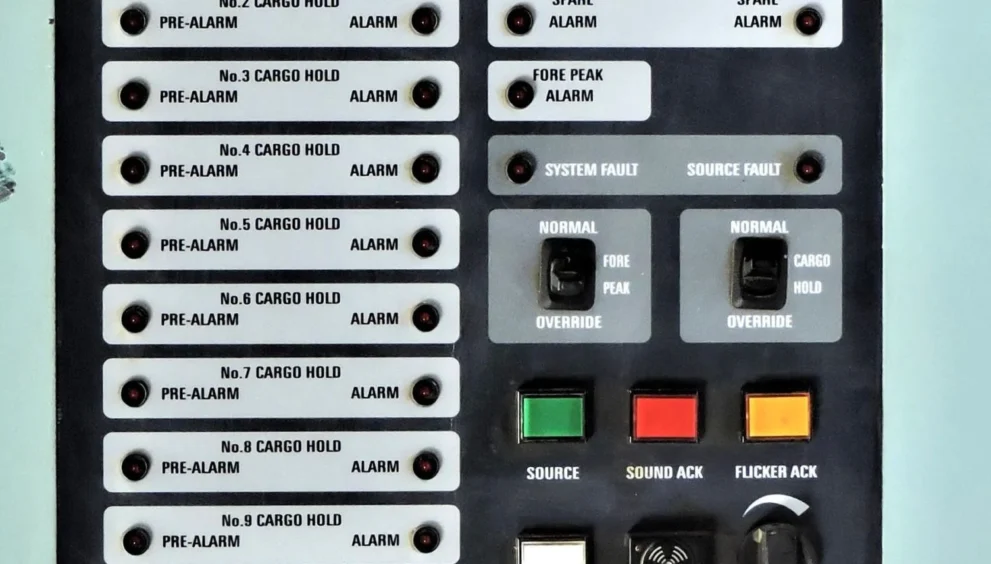
Typically, this panel is linked to sensors located in specific spaces, mainly the forward cargo holds, forepeak tank and other susceptible spaces. When water reaches a predetermined level in those spaces it will activate the sensor which in turn sends a signal to the panel for a designated alarm to sound.
Why It Is So Important on a Bulk Carrier
Bulk carriers often have long, open cargo holds. If water seeps into these holds due to hull damage, cracked bilges, or heavy weather, it can cause cargo shift, loss of stability, and even sinking.
Some of the most tragic bulk carrier incidents in maritime history were caused by unnoticed water ingress. This is why IMO made it mandatory under SOLAS for certain bulk carriers to be fitted with water ingress detection systems.
Areas Monitored by Water Ingress Alarms
On most bulk carriers, the following compartments are monitored
- Forepeak tank
- Cargo holds
- Any dry spaces forward of cargo holds
- Double bottom tanks if fitted with sensors
- Any forward pipe tunnels
What You Should Check as an Officer
When you come on bridge watch or carry out your weekly bridge checks, do not skip the water ingress alarm panel. Here is what you should look for
- Power Supply
Make sure the panel has power and is online. Any fault lights or power failure indicators must be investigated.
- Visual Indicators
Ensure that all zones are showing normal status. No false alarms, no sensor faults, and no bypassed zones unless under maintenance.
- Alarm Function Test
Some panels have a self-test button. If your company PMS or checklists require it, carry out a test and log it properly.
- Log Entries
Always record any alarm triggered, even if it was a test or false alarm. Mention the time, zone, cause, and action taken.
What to Do If an Alarm Sounds
Stay calm but act quickly.
Check the panel display to identify the affected area
Inform the Master immediately
Call the duty engineer and ballast control
Sound the general alarm if required
Activate bilge pumping arrangements if flooding is confirmed
Monitor the water level continuously
Prepare to abandon ship if the situation worsens
Common Defects and Mistakes
Faulty or corroded sensors in cargo holds
Panel left unpowered during maintenance
Lack of regular testing
No entries in bridge log when alarms go off
Officers ignoring brief false alarms
Final Thoughts
The water ingress alarm panel may not be as eye-catching as radar or ECDIS, but it can mean the difference between rescue and tragedy in an emergency. As an officer, you should not regard any other safety equipment on the bridge as less important.
Always test it, and understand it, and respect it.
Stay alert. Stay dry. Stay safe.
Written by a seafarer, for every seafarer out there.
Sample photo of a water ingress panel on the bridge of a bulk carrier having 9 cargo holds