

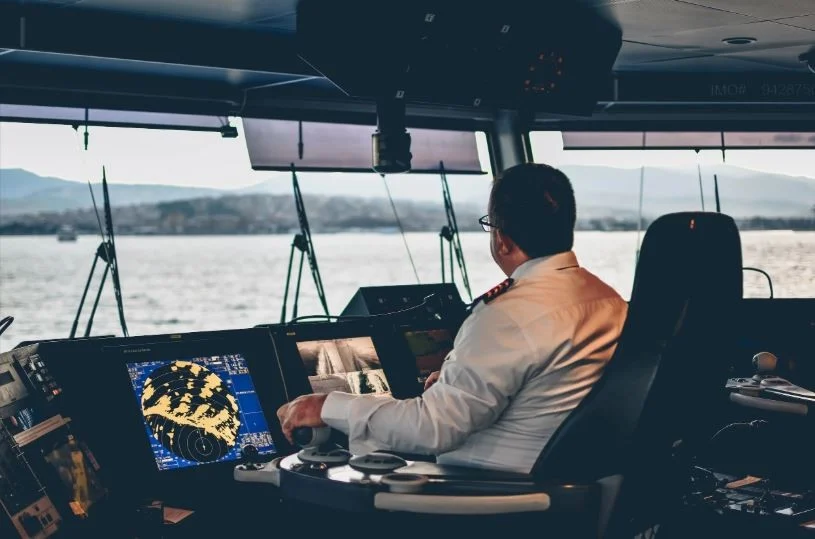
The hours before arrival at port or departure from it are not just busy—they are decisive. For the navigating officer, this is not merely a checklist ritual but the ultimate test of preparedness, awareness, and professionalism. Whether you’re calling at Singapore or sailing out of Rotterdam, every single equipment on the bridge must be verified like your ship’s life depends on it—because it does.
This blog is written for the serious junior officer rising in ranks and the seasoned watchkeeper looking to sharpen the edge. Here’s a comprehensive, humanized breakdown of what to check before you arrive or depart from port.
- Radar (X and S Band)
Tune both radars manually – don’t just rely on auto. Fine-tune gain, clutter (rain/sea), and brilliance.
Range scales – Set primary radar to short range (3 NM or 6 NM) and the secondary to a longer range (12 NM or more).
Parallel indexing – Set it up if you’re using radar-assisted pilotage.
Performance Monitor – Run a performance check at the start of the watch.
Check radar overlays on ECDIS – Ensure sync is proper and CPA/TCPA alarms are active.
- ECDIS
Update status – Ensure ENC permits are valid and latest weekly updates applied.
Safety settings – Verify the safety contour, safety depth, shallow contour, and deep contour are as per the Master’s Standing Orders and passage plan.
Look-ahead time/distance – Check and set per company policy.
Alarm settings – Route deviation, anti-grounding alarms, and positioning alarms must be activated.
User chart display – Ensure necessary overlays like T&P notices and route waypoints are visible.
Position source – Make sure GNSS feed is active and backup source is enabled.
- GNSS (GPS / DGPS)
Position accuracy – Check HDOP/PDOP. If HDOP is poor (>2), inform Master.
Signal strength – Ensure you’re receiving healthy satellite signals.
Cross-check with other systems – Compare with radar range/bearing or visual bearings when near coastal landmarks.
- GMDSS Console
Battery voltage – Verify levels, especially if switching to emergency.
Auto DSC test – Run it if time and regulation permit.
Inmarsat systems – Ensure power ON and logged in to the satellite.
NAVTEX – Check for latest navigational and meteorological warnings.
- Echo Sounder
Function test – Ensure sounder is working, even in deep water.
Range and alarm – Set range suitable for approach and low-depth alarm slightly above the planned UKC.
- AIS
Input verification – Check that vessel’s static and voyage-related data are correct.
CPA alerts – Confirm audible CPA alarm and visual alerts are enabled.
- Bridge Navigational Watch Alarm System (BNWAS)
Operational mode – Ensure it’s activated and not overridden unless under pilotage (and Master agrees).
Reset function – Verify reset buttons around the bridge are functional.
- Magnetic Compass
Deviation card available? – Keep handy for departure.
Readability – Check the compass is readable, clean, and light is working.
- Gyro Compass & Repeaters
Speed & heading feed – Confirm inputs are stable and matching between systems.
Error check – Cross-check gyro with magnetic compass or known bearing if feasible.
Check repeaters – Ensure all bridge wing and steering repeater readouts are aligned.
- Autopilot & Steering Gear
Changeover test – Test shift from manual to auto and vice versa.
Steering mode check – Ensure NFU, FU, and autopilot modes are working.
Rudder angle indicators – Should show correct response and movement.
- Bridge Lighting & Equipment Power Supply
Instrument lights – Check dimmers, especially during night arrival/departure.
Night Vision Mode – Ensure proper red/green backlighting if approaching at night.
Emergency lighting – Confirm operational, especially bridge wing and chart table lamps.
- Internal & External Communications
Bridge to engine room comms – Check talkback system and telegraph.
Bridge wing portable radios – Ensure fully charged and tested.
Whistle, Day/Night Signals – Test whistle, navigation lights, and day shapes.
- Passage Plan Verification
Route check on ECDIS – Confirm passage plan is monitored and active.
Cross-check with paper chart (if used) – Ensure consistency between digital and paper backup.
Waypoint alarms – Confirm waypoint and XTD limits set properly.
- Pilot Boarding Arrangements
ETA confirmation – Confirm with pilot station; check if updated due to current or traffic.
Bridge wing checklist – Have pilot ladder checklist ready and communication procedure reviewed.
- Checklists & Logs
Company Checklists – Pre-arrival and pre-departure bridge checklists to be completed with date, time, and signature.
Bridge Log Book – Pre-fill data as needed (pilotage time, course, engine status, etc.)
Master’s Standing Orders – Read and acknowledge before arrival/departure.
Tips for the Smart Watchkeeper
Don’t rush your checks. It’s your name on the log and your watch.
Think like a pilot—see the approach mentally before the first buoy shows up.
If something looks or feels off, escalate early. Don’t assume someone else checked it.
Always double-check manual inputs on ECDIS like voyage details, UKC, and draught.
If sailing out, prepare for restricted visibility near coast. Always have hand steering ready.
In Closing
Arrival and departure are the most delicate parts of navigation. If something is going to go wrong, it’s most likely during these stages. A well-prepared duty officer is not just following a checklist—they’re building confidence, ensuring safety, and earning trust.
So next time you’re on the bridge before that long-awaited port call or outbound run, run these checks with full focus. This is your job. This is your sea.
Always follow your company specific Checklist and SMS