

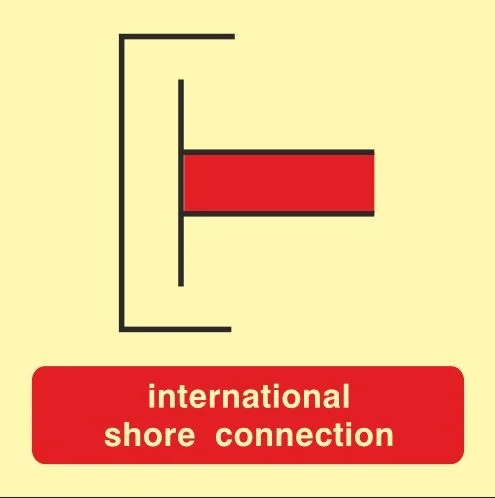
If there’s a fire onboard your ship while it’s alongside a port, and your own firefighting pumps are down, how do you get help from shore? That’s where the International Shore Connection (ISC) comes in.
It’s one of those things that quietly sits on board, rarely used—but when the time comes, its role is absolutely critical.
What is an International Shore Connection?
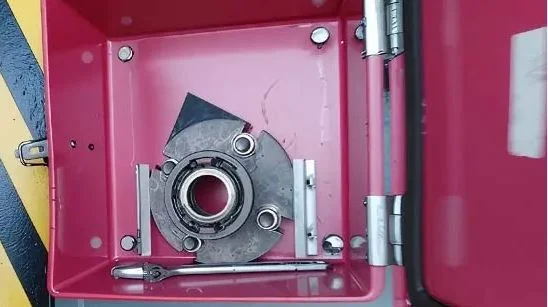
An International Shore Connection is a specially designed fitting that lets firefighting teams on shore hook up their hoses directly to a ship’s fire main system in emergencies. If a fire breaks out onboard and the ship’s own firefighting capabilities are compromised, firefighters on the dock can supply water using this adapter.
In short, it’s a physical bridge between land and sea for emergency water supply.
Why Is It Mandatory?
According to SOLAS Chapter II-2, Regulation 19, all ships are required to carry at least one International Shore Connection. The key idea here is interoperability—this fitting is uniform worldwide, meaning it doesn’t matter what port you’re in; the fire brigade’s hose should be able to connect.
Standard Dimensions (As per ISO 9097):
The ISC must follow specific size guidelines so it’s compatible everywhere. Here are the specs:
Outside diameter: 178 mm
Inner diameter: 64 mm
Bolt circle diameter: 132 mm
Bolt holes: 4, equally spaced
Bolt hole diameter: 19 mm
Flange thickness: At least 14.5 mm
Material: Usually gunmetal, bronze, or galvanized steel
The flange is usually unthreaded and has a flat face to allow easy connection with standard gaskets and clamps.
Where Is It Kept?
Typically, it’s stored in the fire locker or in an easily accessible area near the accommodation ladder or amidships. Some ships have it mounted, while others keep it portable.
Real-World Use: More Than Just a Checklist Item
While the ISC looks simple, setting it up isn’t always plug-and-play. Here are a few things experienced crew members know:
Shore water may have higher pressure than your ship’s system—using a reducer or valve helps protect the fire main.
If your fire main is breached internally, the ISC won’t help—it can flood compartments or lead to uncontrolled leaks.
Many fire teams are unfamiliar with maritime systems—clear markings and crew readiness matter more than you think.
Gaskets wear out, and bolts corrode—regular inspection ensures the ISC works when it’s supposed to.
Conclusion
The International Shore Connection is a piece of hardware most hope they never have to use—but its presence is non-negotiable. When onboard systems falter, this connection allows shore crews to step in without delay. It’s not about routine—it’s about readiness.
Make sure your ISC is not just onboard, but also understood, inspected, and accessible. When time runs out, it might be your only option left