

Stepping onboard as a new Engine Cadet or Junior Engineer is more than just reporting for duty — it marks the start of your professional reputation at sea. From my 28 years in the engine room, I can tell you that the first day sets the tone for your entire contract. The quicker you familiarize yourself with your surroundings, your duties, and your safety responsibilities, the smoother your adjustment to shipboard life will be.
Engine Room Familiarization
Your first priority is to know your workplace inside out.
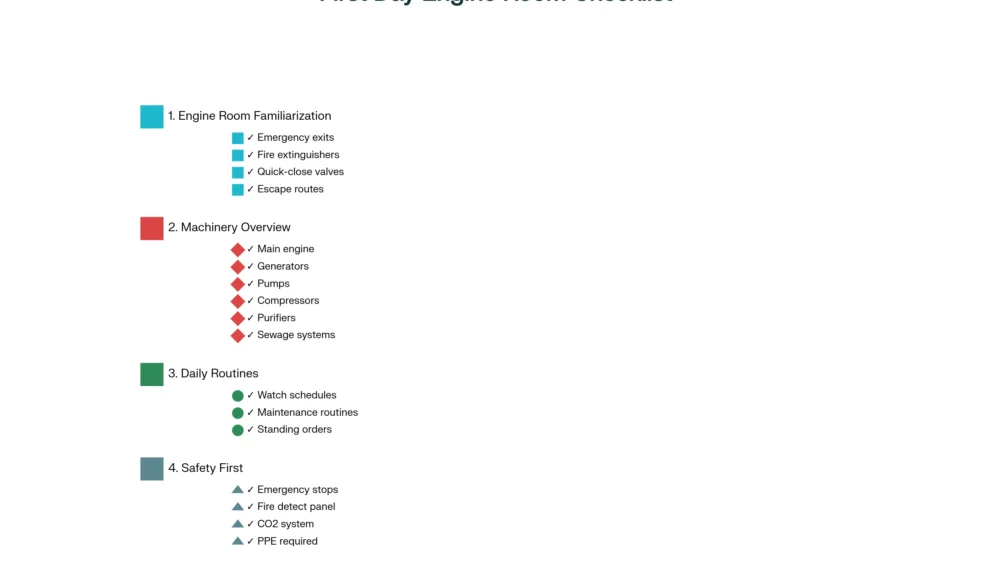
- Walk through the entire engine room and note the layout.
- Identify all emergency exits and how to reach them from different levels.
- Locate fire extinguishers, emergency fire hoses, and quick-closing valves for fuel lines.
- Trace all escape routes and ensure they are free of obstructions.
This knowledge will be crucial in a real emergency when seconds matter.
Machinery Overview
Familiarity with machinery will help you understand daily operations and assist seniors more effectively.
- Study the location and arrangement of the main engine and auxiliary machinery.
- Check positions of generators, pumps, and compressors, and understand their basic purpose.
- Locate the fuel and lube oil purifiers and learn which fluids they handle.
- Find the sewage treatment plant and understand its operational importance.
Your aim on day one is location awareness, not deep technical operation — that comes with practice.
Daily Routines
Engine room work runs on strict discipline and routines.
- Learn the ship’s watchkeeping schedule and where you fit in.
- Get clarity on the maintenance routines currently in progress.
- Read and understand standing orders from the Chief Engineer — they are the framework for operational safety and discipline.
When you know what to expect each day, you’ll be better prepared for tasks and emergencies.
Safety First
Safety is non-negotiable at sea.
- Locate emergency stop systems for critical machinery.
- Find the fire detection panels and understand how alarms are indicated.
- Understand the CO₂ release system locations and procedure.
- Follow PPE requirements strictly — helmet, gloves, safety shoes, ear protection, and goggles as applicable.
- Refresh yourself on lockout-tagout (LOTO) procedures before touching any equipment.
In the engine room, complacency is dangerous — vigilance is survival.
Ask, Observe, Learn
The best engineers are those who actively seek knowledge.
- Never pretend to know something you don’t.
- Ask seniors respectfully and take detailed notes.
- Watch troubleshooting closely. How a Chief Engineer or Second Engineer isolates a problem will teach you more than manuals ever can.
- Keep learning every day — at sea, experience is the best textbook.
Building Your Reputation
Small habits matter. Clean tools after use, maintain good housekeeping, and report even minor incidents or abnormalities promptly. Reliability is measured in the trust others place in you — earn it through consistency, safety awareness, and a willingness to learn.
Your first day onboard is about more than finding your cabin or completing paperwork. It’s about stepping into the heartbeat of the ship’s operations, understanding your environment, and committing to the discipline, teamwork, and safety that define a good seafarer.