

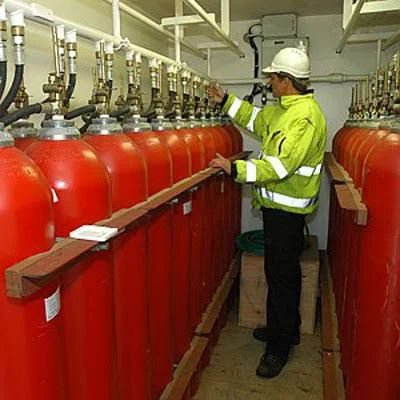
When you stand on the steel deck of an engine room, surrounded by machinery and the constant hum of working life, fire safety isn’t just another drill—it’s a responsibility that sits heavy on the shoulders of every seafarer. For Chief Engineers and Masters, ensuring that the crew knows what to do when danger strikes isn’t just a rule—it’s the difference between coming home and tragedy.
Why CO₂ Matters
Think of CO₂ not as a simple button on the control panel, but as the ship’s lifeboat against a fire that’s out of control. This gas sweeps through machinery spaces, snuffs out the flames by stealing away oxygen, and offers the final hope when hoses and extinguishers are not enough.
But that same power makes CO₂ deadly for humans. Once released, there’s no going back. “CO₂ saves the ship—but only if you respect the system.” It’s a rule forged in sweat, fear, and sometimes heartbreak.
What Every Crew Should Know
- CO₂ sits, silent and pressurized, in a special room of high-pressure cylinders.
- No one enters the fire zone once CO₂ fills it; the gas doesn’t forgive mistakes.
- Release can be triggered on scene or remotely, but always make sure everyone is safely out—no hesitation or guessing.
- Don’t even think about returning inside until the air is fresh and safe, no matter how urgent the repair.
The Lesson in Every Drill
Drills aren’t just routine. Each time the alarm sounds, every member of the crew must know their part—not just for the Chief Engineer, but for the motorman whose life depends on those few extra seconds.
No one should ever feel afraid to double-check roll calls, to ask “Are we all clear?” Those small questions save lives.
When Safety Was Forgotten: A True Story
On a routine morning, an engine room fire broke out aboard a bulk carrier. Procedures moved quickly: the team braved the smoke, the decision was made, and the order to release CO₂ was given once all were accounted for—or so they thought.
Unknown to the bridge and engine team, a motorman had gone back for a forgotten spanner, trusting his training and teammates to keep him safe. CO₂ flooded the space in seconds, and what was meant as salvation became tragedy. The rescue teams could only enter after the toxic gas cleared. That time is more than machinery could ever afford to lose.
This story isn’t shared to scare—it’s shared to remind. Every face in the engine room is someone’s friend, someone’s family. No deadline, no urgent machinery fix, is worth missing a single crew member.
The Joint Message from Chief Engineer and Master
No ship, no contract, no rush to save machinery should ever overshadow the safety of the crew. Take drills seriously. If uncertain, ask—even in the “heat” of the moment. Trust in one another, and know that looking out for your mates means everything.
Machinery can be rebuilt. A crew can never be replaced.
CO₂ is a blessing and a threat. Treat its power with caution, keep crew safety at the heart of every action, and honor those lessons written in the experience of engineers and masters over decades at sea.