

Freeboard is one of the most important concepts in ship design, stability, and safety. Every navigating officer must understand what freeboard is, why it is regulated, and how it affects the seaworthiness of a vessel. Incorrect understanding of freeboard can lead to unsafe loading, structural stress, and even catastrophic loss of buoyancy in heavy weather.
This guide explains freeboard in simple, practical, and officer-friendly language, covering definitions, regulatory requirements, calculation principles, influencing factors, and real-world applications.
What is Freeboard
Freeboard is the vertical distance measured from the freeboard deck to the waterline. In simple terms, it is the amount of ship side above the water. Freeboard represents the ship’s reserve buoyancy and directly influences safety during heavy weather, deck wetness, cargo protection, and overall seaworthiness.
Higher freeboard means more buoyancy and safety margin. Lower freeboard means less reserve buoyancy and higher risk of deck flooding and water ingress.
Why Freeboard Matters
Freeboard is crucial because it influences several aspects of ship safety:
Reserve buoyancy
Stability in rough seas
Protection of cargo spaces
Structural strength
Deck wetness and slamming
Ability to recover from heel or roll
Compliance with statutory regulations
Ships with insufficient freeboard are more likely to take water on deck, lose stability, and suffer structural damage.
Regulatory Background: Load Line Convention
Freeboard is strictly regulated under the International Convention on Load Lines, 1966 and its 1988 Protocol. The Load Line rules ensure minimum freeboard for every seagoing vessel based on:
Ship type
Length
Hull shape
Strength
Superstructure
Seasonal zones
Surveyors determine the minimum freeboard during the vessel’s assignment of load lines.
Understanding the Load Line Mark
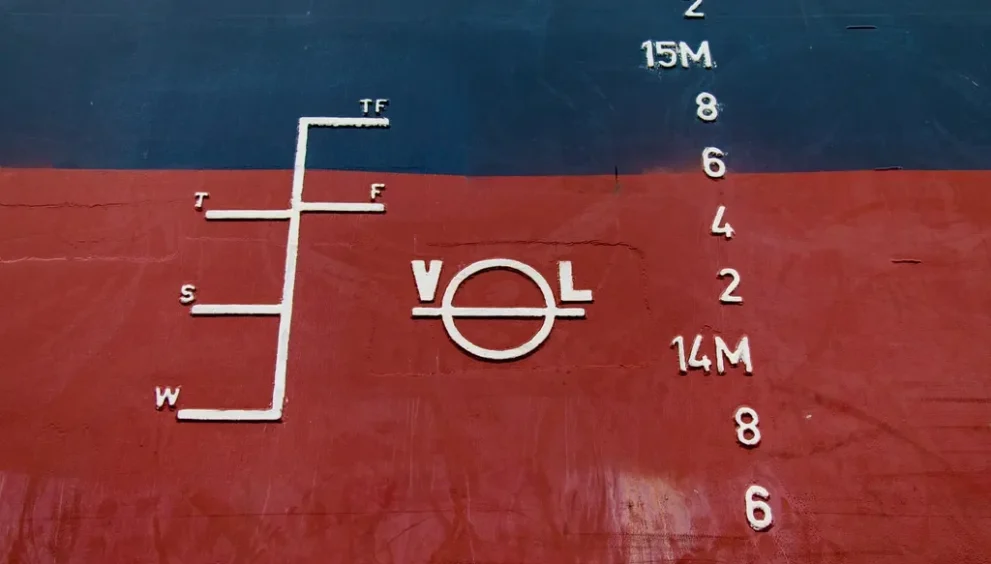
The Load Line or Plimsoll mark on the ship’s side shows the safe loading limits. The horizontal line at the centre of the circle represents the Summer Load Line. The freeboard is measured from the upper edge of the summer load line to the freeboard deck.
The markings include:
TF (Tropical Fresh Water)
F (Fresh Water)
T (Tropical Salt Water)
S (Summer Salt Water)
W (Winter Salt Water)
WNA (Winter North Atlantic)
Each corresponds to different allowed drafts depending on environmental severity.
Freeboard Deck
The freeboard deck is the uppermost complete, permanent, and watertight deck. It is used as the reference point for all freeboard measurements. Any openings on this deck must be weathertight or watertight, depending on their location.
Incorrectly identifying the freeboard deck is a common cause of errors during surveys and calculations.
Types of Freeboard
- Minimum Freeboard
The least freeboard allowed by international regulations. - Assigned Freeboard
The actual freeboard assigned to a vessel after structural and design considerations. - Geometric Freeboard
Calculated purely based on hull geometry and dimensions. - Seasonal Freeboard
Freeboard adjusted for different climatic zones. - Tropical and Fresh Water Freeboard
Corrected freeboard when operating in lighter water density or calmer climates.
How Freeboard is Calculated
Freeboard is calculated during ship design and certification. The calculation is based on a combination of ship dimensions, structural strength, floodability, and stability.
The general steps involved in calculating freeboard are:
- Determine Ship Length
Length between perpendiculars or load line length, whichever is applicable. - Choose Freeboard Table
The Load Line Convention has a freeboard table for different types of ships:
Type A ships have higher watertight integrity and are assigned lower freeboard.
Type B ships have normal cargo openings and are assigned higher freeboard. - Read Base Freeboard from Table
The base freeboard is obtained from the Load Line tables based on ship length. - Apply Corrections
The following corrections are applied:
Superstructure allowance
Sheer correction
Minimum bow height correction
Deckhouse correction
Excess strength deduction
Correction for raised quarter decks
Correction for openings, hatchways, and weathertight arrangements
Correction for non-conforming items identified by surveyors - Final Assigned Freeboard
The base freeboard plus or minus all corrections gives the assigned freeboard.
This value is then marked on the ship as the Summer Load Line.
Simplified Freeboard Calculation Example
Consider a general cargo ship:
Length: 180 metres
Type: Type B
Freeboard table gives base freeboard: 3500 mm
Superstructure allows reduction: minus 300 mm
Sheer correction: minus 150 mm
Correction for large hatchways: plus 200 mm
Final assigned freeboard = 3500 – 300 – 150 + 200 = 3250 mm
This 3.25 metre freeboard corresponds to the vertical distance between the freeboard deck and summer load line.
Factors Affecting Freeboard
- Ship Type
Tankers are often Type A ships with higher integrity and lower freeboard.
Bulk carriers and general cargo ships are Type B with higher freeboard. - Hull Strength
Stronger hulls may receive lower freeboard. - Superstructure
More superstructure increases reserve buoyancy and reduces required freeboard. - Openings
More deck openings increase required freeboard. - Sheer
Greater sheer increases buoyancy and allows reduction in freeboard. - Bow Height
Minimum bow height must be maintained, affecting freeboard calculations. - Seasonal Zones
Freeboard changes depending on zone severity. - Water Density
Fresh water operations require additional freeboard because the ship sinks deeper.
Freeboard and Stability
Freeboard directly contributes to reserve buoyancy. A ship with higher freeboard has larger righting arms during roll and better capability to withstand large waves.
Low freeboard increases:
Deck wetness
Slamming
Water ingress risk
Reduction in GM if water accumulates
During loading operations, officers must monitor draft, freeboard, and trim to maintain stability.
Freeboard and Deck Wetness
Excessive deck wetness can:
Damage deck fittings
Affect hatch covers
Reduce visibility
Impact safe navigation
Vessels with low freeboard in heavy weather may experience continuous green water on deck.
Freeboard and Cargo Safety
Freeboard is crucial for bulk carriers and container ships as it protects cargo spaces from waves and spray. Insufficient freeboard can lead to water ingress through hatch covers.
Freeboard in Loading and Unloading Operations
During cargo operations, ships with low freeboard must ensure:
Ballast management is correct
Freeboard marks are visible
Draft readings are accurate
Load line limits are not exceeded
Port State Control often checks freeboard during arrival inspections.
Freeboard in Different Waters
Fresh Water
Ships sink deeper, so actual freeboard reduces. Fresh water allowance must be applied.
Tropical Seas
Calmer conditions allow smaller freeboard.
Winter North Atlantic
Harsh seas require the greatest freeboard.
Surveys and Freeboard Inspections
Annual surveys ensure:
Load line markings are visible
Freeboard deck arrangements are intact
Hatch covers meet weathertight requirements
Closing appliances are functional
Scuppers and freeing ports are working
Shell doors and openings are sealed correctly
Any deficiency can lead to change in load line certificate.
Common Freeboard Mistakes Officers Make
Measuring freeboard incorrectly from wrong deck
Ignoring water density corrections
Loading beyond summer draft
Incorrectly reading load line marks
Misjudging trim during draft calculation
Underestimating effect of ballast changes
Neglecting hatch cover and closing arrangement condition
Not maintaining visibility of marks during operations
Real Incidents Caused by Inadequate Freeboard
Deck flooding damaging cargo
Loss of hatch covers in storms
Bulk carriers taking water on deck and suffering stability loss
Groundings due to incorrect draft calculations
Water ingress causing loss of buoyancy
Many of these incidents could have been prevented with proper understanding of freeboard.
Conclusion
Freeboard is a fundamental concept that every ship officer must thoroughly understand. It represents the vessel’s reserve buoyancy and forms the basis of safe loading, stability, and seaworthiness. From regulatory compliance to practical navigation, freeboard plays a vital role in ensuring vessel safety at sea.
Understanding how freeboard is assigned, calculated, and maintained allows officers to plan safe voyages, protect cargo, and ensure compliance with Load Line rules.