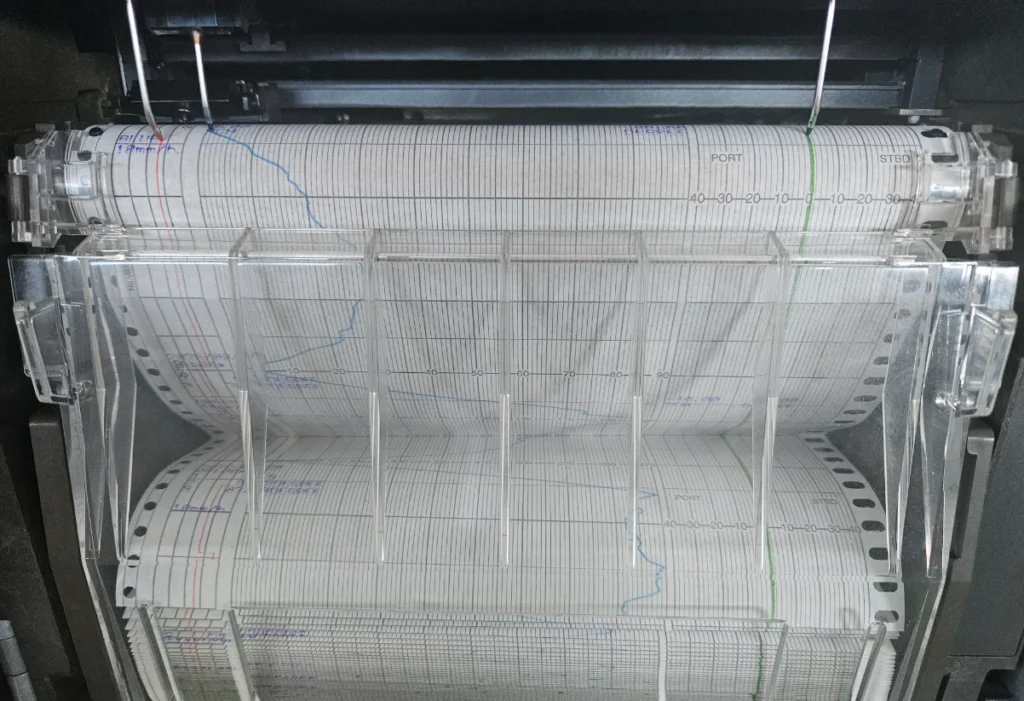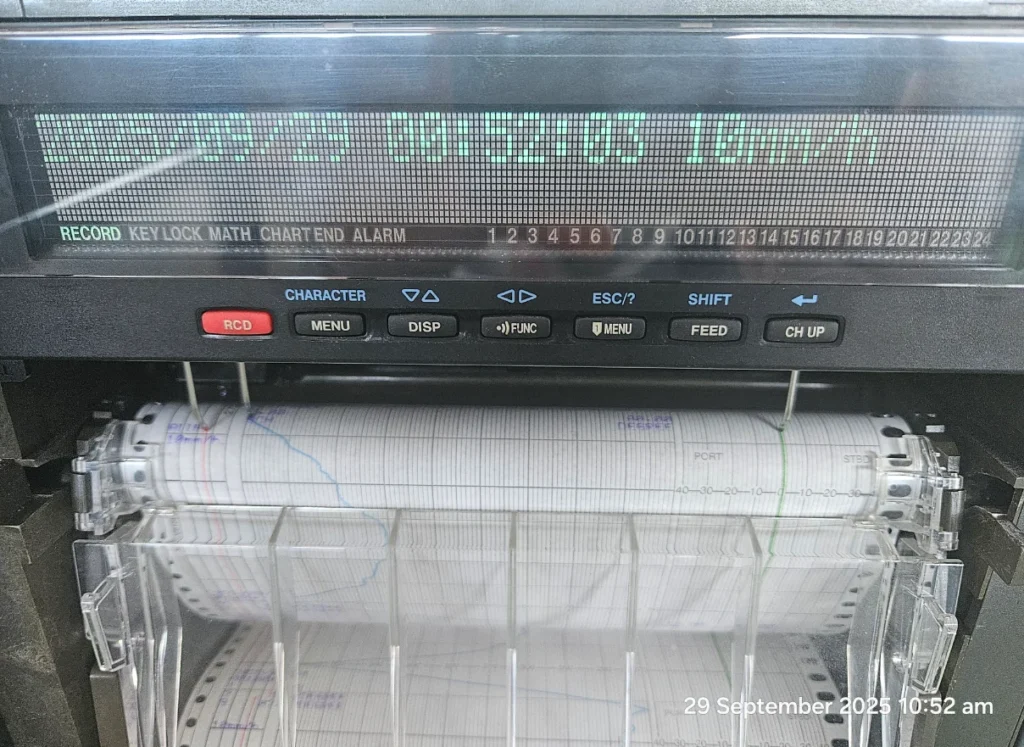

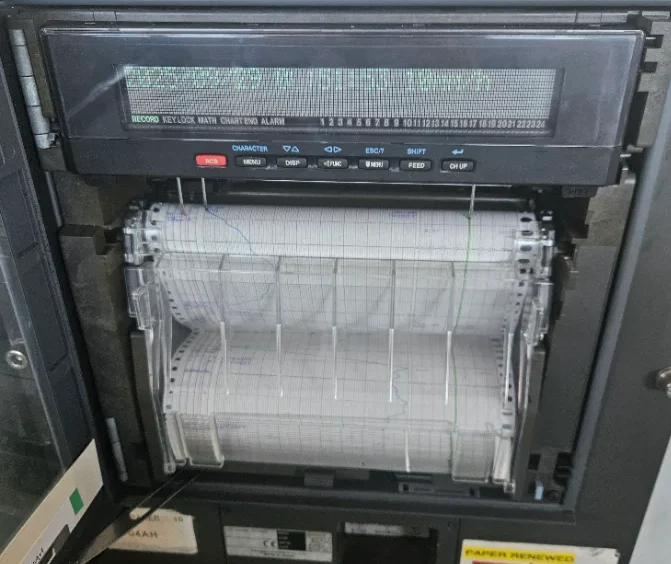
There exists, on the bridge of every vessel and among a plethora of instruments, one device, quietly working to record every movement of the ship’s heading-the Course Recorder. Unlike the radar or ECDIS, which are so demanding of attention at every moment, the Course Recorder never summons notice until an error has been committed. But when that happens, this becomes one of the most important pieces of evidence in navigation and investigations.
This blog will explain what a course recorder is, why it matters, how it works, and what officers must check to keep it reliable.
What is a Course Recorder?
A course recorder, or trace, is an instrument fitted on the bridge that continuously records the vessel’s heading over time. It creates a trace of the ship’s course, given by either the gyro compass or magnetic compass, traditionally on paper but now increasingly digital.
In simple terms, this is like a “black box” for the ship’s steering, showing whether the vessel was maintaining course, altering, or swinging.
Why is a Course Recorder Important?
- Evidence in Case of Accidents : In case of a collision, grounding, or near miss, the course recorder trace provides an unbiased record of the ship’s movements.
- Navigation Discipline: It allows the Master and auditors to check whether helm orders were executed correctly and if the vessel kept a steady course.
- Training Tool: Course recorder traces provide a useful tool in studying helm response, overshoot, and steering patterns by junior officers.
- Regulatory Requirement : SOLAS requires vessels above a particular tonnage to carry a course recorder as part of the navigational equipment.
How Does a Course Recorder Work?
- Input Signal : The recorder receives heading data from the ship’s gyro compass or magnetic compass.
- Recording Medium : Traditionally, this was a paper chart moving at a fixed speed with a pen drawing the course line. In modern units it is stored electronically.
- Time Base :The recorder advances at a constant speed so that heading changes can be matched with time.
- Trace Output: Output consists of one line that is continuous, showing deviations, alterations, and swings.
What information does a course recorder provide?
Steady Course : A straight line on the trace means that the vessel maintained course.
Course Changes : A curve or bend indicates helm orders and course changes.
Helm Response : Overshoot and correction can be observed when the ship sets on a new course.
Steering Failures: Irregular traces may denote poor steering control or equipment malfunction.
Common Uses on Board
- During Navigation Audits : Inspectors may check the recorder trace to see if OOW maintained the planned course.
- Accident Investigation : To reconstruct the sequence of course changes leading to an incident.
- During Drills and Training : Assess the helmsman’s precision in carrying out orders.
- Cross Verification : With log book entries, VDR (Voyage Data Recorder), and radar plots.
What Officers Must Check Regularly
Recording Status : Ensure that the paper roll or digital memory is working and recording.
Pen Ink / Tracing Quality : Ink flow and line clarity for the paper types.
Time Synchronisation : Check recorder’s time against ship’s standard time.
Alarm/Failure Indicators : Monitor for signal loss from the gyro or power failure.
Retention of Records : Keep course recorder charts according to company policy and legal requirements.
Best Practices for Bridge Teams
Always verify before embarking that the course recorder is working.
File and label the paper rolls with date, voyage, and signature.
The OOW should confirm that the recorder is recording correctly during handovers.
If the gyro fails, switch the recorder to magnetic compass input if available
In the event of an incident the recorder trace should be secured immediately and handed to the Master.
Real-Life Importance
Course recorder traces have been used in the reconstruction of many maritime accidents. For instance, in collision cases, investigators compared helm orders, engine movements, and radar plots against the course recorder trace to verify if the ship was really on the course reported by the OOW. In certain cases, it exposed discrepancies between statements and actual movements, highlighting its role as the silent witness on the ship.
Conclusion
Not as flashy perhaps as ECDIS and radar, course recorder is nonetheless a very important device: it speaks the truth without prejudice, minute to minute. Professional seamanship for the responsible navigator has to go beyond just ticking the appropriate box to confirm that the course recorder is working. Next time you go on watch, take a look at the course recorder. Remember, it is not just recording a line it is recording your story as a navigator.