
Learn everything about oil spill drills on ships why they’re conducted, step-by-step procedures, SOPEP use, risk assessments, crew duties, and PSC/RightShip expectations. The most detailed guide for Masters, officers, cadets, and ratings.
Introduction
An oil spill at sea is one of the most serious marine emergencies. Beyond the financial penalties, it causes severe environmental damage and reputational harm to the shipowner. For the crew, it can mean detentions, loss of certificates, or even criminal charges if negligence is proven.
That is why oil spill drills are not just a box-ticking exercise. They are a chance for the crew to practice the Shipboard Oil Pollution Emergency Plan (SOPEP), test pollution response equipment, and prove to inspectors that the ship can handle an emergency swiftly and professionally.
This blog explains:
Why oil spill drills are vital
MARPOL and SOLAS requirements
Risk assessment and toolbox meeting
Step-by-step drill procedure
Duties of each rank
Common PSC and RightShip findings
Pro tips from experienced Masters
Why Are Oil Spill Drills Important?
Legal compliance: MARPOL Annex I requires every ship to carry a SOPEP and conduct pollution response drills.
Preparedness: Drills ensure crew know exactly how to respond during accidental spills from bunkering, sludge transfer, or tank cleaning.
Inspection readiness: Oil spill drills are frequently checked by PSC, SIRE, and RightShip inspectors.
Environmental responsibility: Prevention and control of pollution is a moral duty as well as a legal one.
Team coordination: Everyone learns their role from activating the SOPEP to rigging anti-pollution gear.
Regulatory Requirements
MARPOL Annex I requires all ships above 400 GT to have a SOPEP.
Oil pollution prevention drills must be conducted every three months.
Drills must include notification procedures, SOPEP equipment use, and communication with authorities.
Records of drills must be kept in the SOPEP logbook or official logbook.
Planning an Oil Spill Drill: Risk Assessment & Toolbox Meeting
Risk Assessment
Before the drill, the Safety Officer and Master must evaluate:
Where the simulated spill will occur (deck, manifold, engine room).
Hazards during the drill (slippery deck, trip hazards, heavy equipment).
Availability of crew and weather conditions.
Toolbox Meeting
Brief the crew on the scenario (e.g., bunker hose rupture, overboard discharge, tank overflow).
Assign duties according to the SOPEP.
Remind the team about personal safety (gloves, goggles, harnesses if near ship side).
Explain communication procedures.
Equipment Check
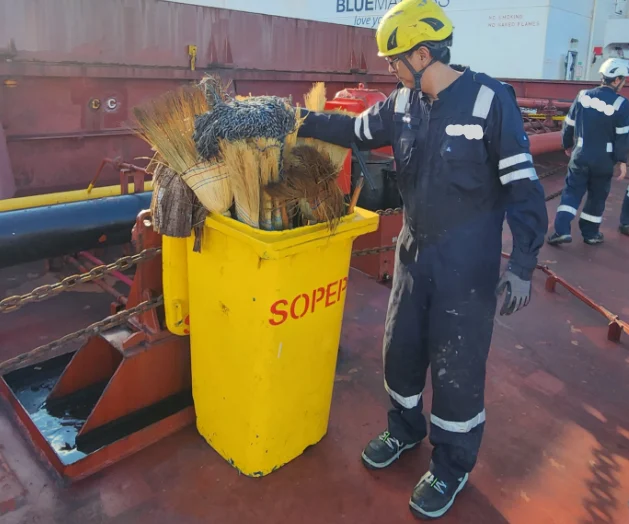
SOPEP locker to be opened.
Verify absorbent pads, sawdust, booms, and scupper plugs are ready.
Ensure oil discharge monitoring equipment (ODME) is on standby.
Step-by-Step Oil Spill Drill Procedure
- Alarm and Initial Response
Raise the alarm – announce “Oil Spill Drill in progress.”
Stop any transfer operation if simulated spill occurs during bunkering.
Identify source of spill (e.g., manifold leak).
- Containment of Spill Onboard
Plug or isolate the leak.
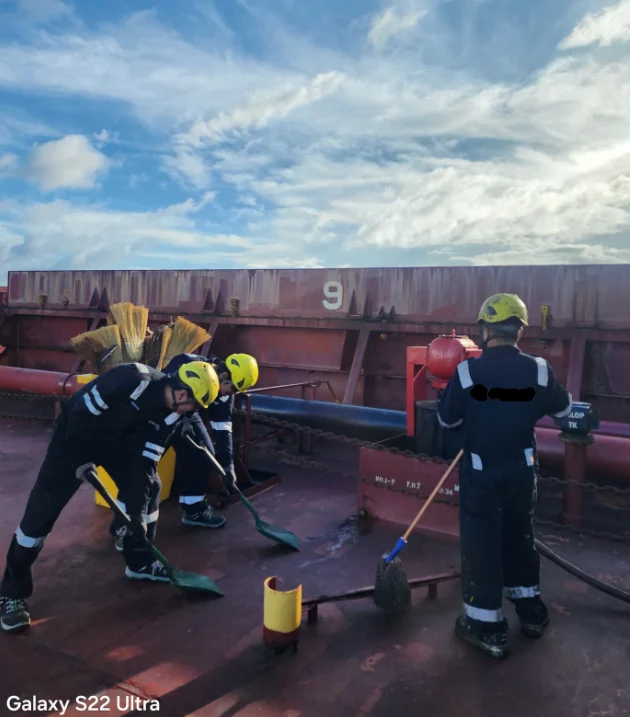
Rig scupper plugs to prevent oil from reaching overboard.
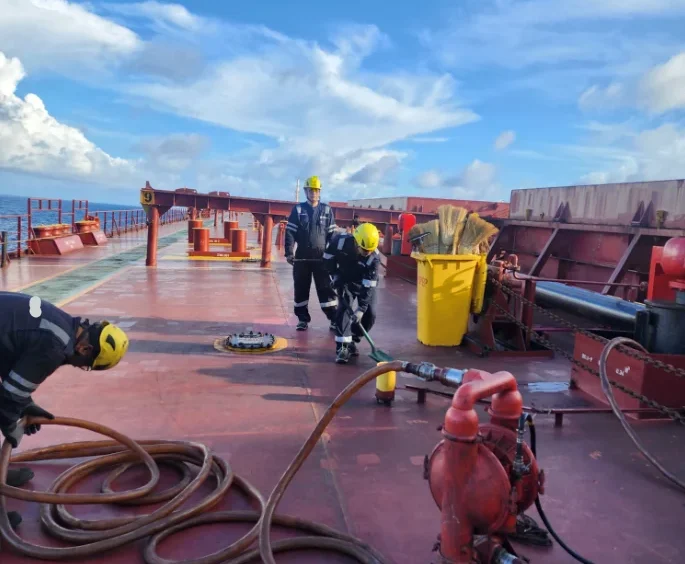
Use absorbent pads and sawdust to contain the oil.
- Deployment of SOPEP Equipment
Deploy absorbent booms around the scuppers or near ship’s side.
Place oil dispersant spray if included in plan (only where permitted).
Prepare recovery drums for contaminated material.
- Notification Procedures
Inform the Master immediately.
Master/Designated Person follows SOPEP contact list – notify flag, coastal state, and company.
Complete the Oil Pollution Reporting Form.
- Team Coordination
Deck team contains the spill.
Engine team ensures bilges and overboard valves are secure.
Bridge team logs events and communications.
- Casualty or Secondary Incident
If crew exposure is simulated, medical response team acts.
Drill may include safe evacuation from contaminated area.
- Stand Down and Recovery
Collect contaminated absorbents into drums.
Clean deck with detergent if safe.
Record disposal arrangements as per MARPOL.
Duties During Oil Spill Drills
Master:
Has overall command.
Ensures notifications are made as per SOPEP.
Leads post-drill debrief.
Chief Officer (SOPEP Officer):
Directs deck team.
Ensures SOPEP equipment is deployed correctly.
Keeps drill records.
Chief Engineer:
Ensures machinery and bilge systems are secure.
Oversees pump stoppages or valve closures.
Deck Officers:
Supervise scupper plugging, absorbent deployment, and boom rigging.
Maintain communication with bridge.
Cadets & Junior Officers:
Assist in rigging and handling absorbents.
Learn the SOPEP equipment layout.
Ratings:
Deploy equipment physically.
Collect and dispose of contaminated materials.
Secure affected deck areas.
Common PSC & RightShip Observations
Crew unaware of SOPEP locker contents.
Contact numbers in SOPEP outdated.
Scupper plugs missing or damaged.
Absorbent pads and booms expired or not replenished.
Drill records incomplete or missing.
Improper stowage of recovered oily waste.
Pro Tips for Effective Oil Spill Drills
Always rotate scenarios – bunker manifold rupture, fuel overflow, engine room bilge discharge.
Keep SOPEP locker tidy and replenished after every drill.
Update the SOPEP contact list regularly.
Train cadets and junior crew by letting them physically deploy pads and plugs.
Time your drill – inspectors may ask how long it took to respond.
Conduct joint drills during actual bunkering (with caution).
Conclusion
An oil spill is one of the worst accidents a ship can face – both for the environment and for the crew’s career. Oil spill drills ensure that the ship’s SOPEP is not just a document, but a living system of preparedness.
Whether you are the Master leading the drill, the Chief Officer deploying equipment, or a cadet learning the ropes, take every oil spill drill seriously.
Because prevention is always better than pollution.