

Introduction
Emergencies at sea often test the limits of crew training. Enclosed space incidents—such as toxic gas exposure, oxygen deficiency, or fires in cargo or machinery spaces—pose serious risks to life. Similarly, medical emergencies require quick and organised evacuation procedures, sometimes involving helicopter or boat transfers.
Both Enclosed Space Rescue Drills and Medical Evacuation Drills are critical to ensure crew safety, compliance with SOLAS Chapter III, ISM Code, and PSC expectations, and readiness to handle real-life emergencies with confidence.
This guide covers:
- Why these drills are vital
- Step-by-step procedures
- Roles of crew members
- PSC inspection focus
- Pro tips for realistic and safe practice
Part 1: Enclosed Space Rescue Drill
Why It Matters
Enclosed spaces can contain toxic gases, low oxygen, or fire hazards.
Crew may need to respond within minutes to save life.
Many PSC inspections highlight deficiencies in enclosed space training.
Pre-Drill Planning
Risk Assessment: Identify hazards like oxygen deficiency, flammable gases, slippery surfaces.
Permit to Work: Ensure entry permits and ventilation checks are done.
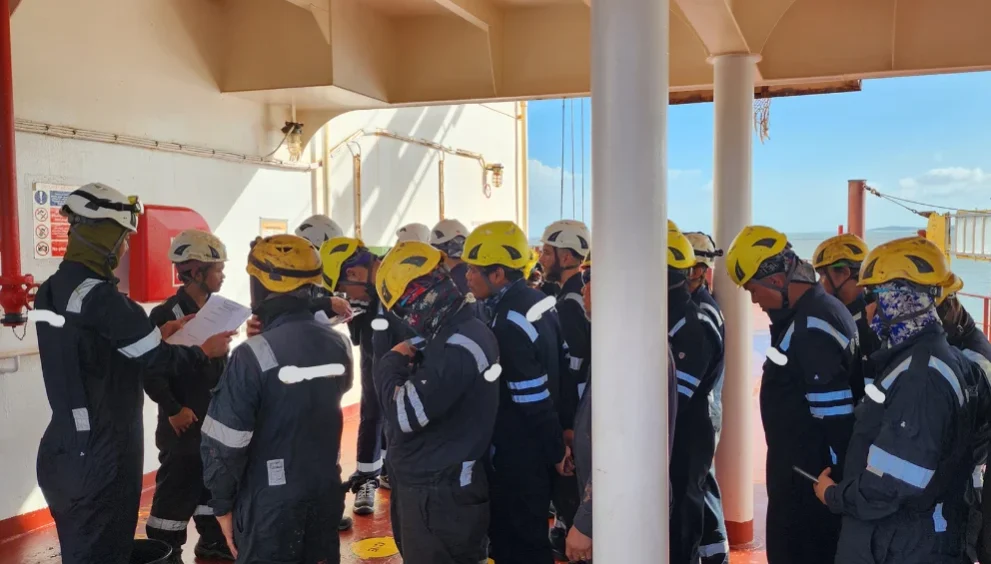
Toolbox Talk: Brief crew on scenario, PPE, SCBA use, and rescue roles.
Equipment Check: Verify SCBA sets, lifelines, gas detectors, and rescue harnesses.
Step-by-Step Procedure
- Alarm & Initial Response
Raise the emergency alarm.
Identify the location and type of incident in the enclosed space.
- Bridge & Master Actions
Master assigns safety officer and coordinates with engine and deck teams.
Ensure ventilation and gas isolation procedures are followed.
- Rescue Team Actions
Don full PPE and SCBA.
Use lifeline to enter enclosed space.
Secure and rescue casualty safely using stretcher or harness.
Monitor gas levels and ensure rescue team safety.
- Post-Rescue Actions
Evacuate casualty to muster station.
Administer first aid if required.
Debrief crew and record drill details in logbook.
Part 2: Medical Evacuation Drill
Why It Matters
Serious injuries, heart attacks, or severe illness may require rapid transfer ashore.
Helicopter or boat evacuation procedures must be familiar to the crew.
PSC and insurance companies often ask for evidence of medical evacuation readiness.
Pre-Drill Preparation
Scenario Selection: Simulate fracture, heart attack, or serious illness.
Toolbox Meeting: Assign roles—medical officer, stretcher party, rescue boat team, communication officer.
Equipment Check: Stretchers, medical kit, stretcher hoist, emergency signals, and survival suits.
Step-by-Step Procedure
- Alarm & Initial Response
Raise medical emergency alarm.
Notify Master, bridge, and designated medical officer.
- Casualty Stabilisation
Administer first aid onboard.
Immobilise fractures or provide oxygen if required.
- Evacuation Preparation
Prepare stretcher and secure casualty.
Ensure safety harnesses for helicopter transfer or boat embarkation.
Communicate with the receiving authority (port, coast guard, or medevac team).
- Evacuation Execution
Transfer casualty safely to helicopter or rescue boat.
Ensure continuous monitoring and support during transfer.
- Post-Drill Review
Debrief crew, identify weaknesses, and document the drill
PSC & RightShip Inspection Focus
Evidence of recent drills (frequency, logbook entries).
Correct use of PPE, SCBA, and life-saving equipment.
Crew familiarity with emergency procedures and communication.
Condition and readiness of rescue boats, stretchers, and survival gear.
Documentation of permit-to-work for enclosed space entries.
Best Practices & Pro Tips
Rotate crew roles to ensure all are trained.
Include realistic hazards like simulated gas leaks or night-time scenarios.
Test communication methods between bridge, enclosed space, and evacuation team.
Always conduct post-drill debriefs and identify improvements.
Record timings of rescue response to evaluate efficiency.
Conclusion
Both Enclosed Space Rescue and Medical Evacuation Drills are lifesaving exercises that demand practice, planning, and precision. By conducting realistic, safe, and well-documented drills, ships ensure compliance, readiness for inspections, and above all, protection of the crew and casualties.
Preparation, coordination, and repeated practice can save lives when every second counts
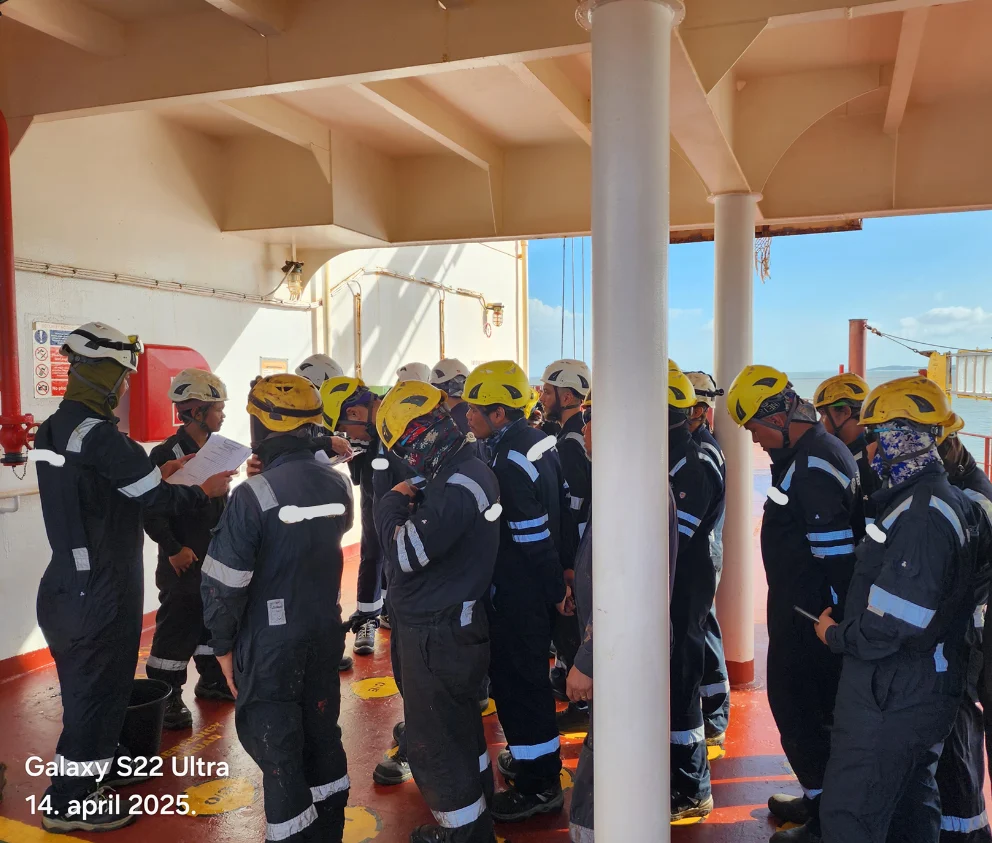
Mustering the crew
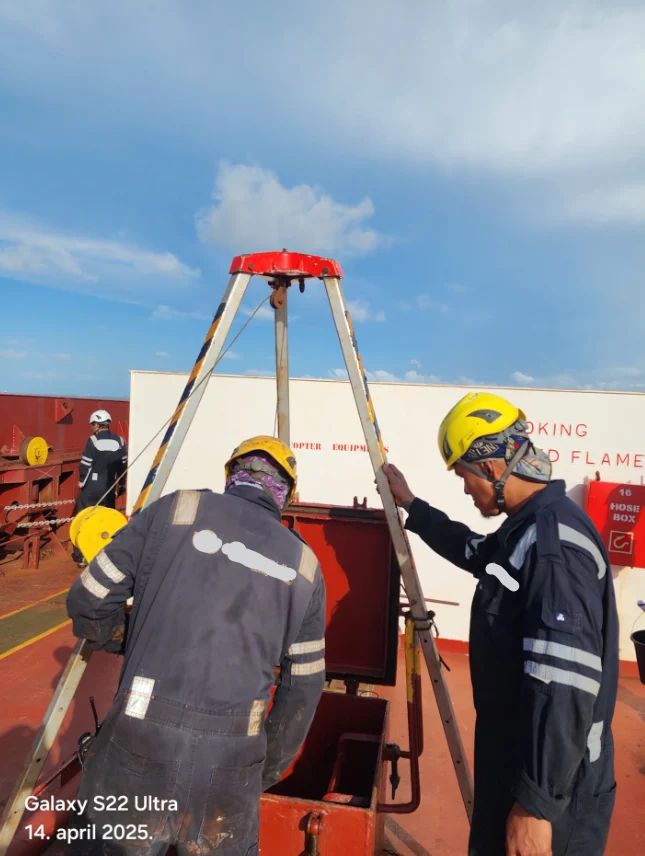
Rigging of Tripod for rescue from a cargo hold
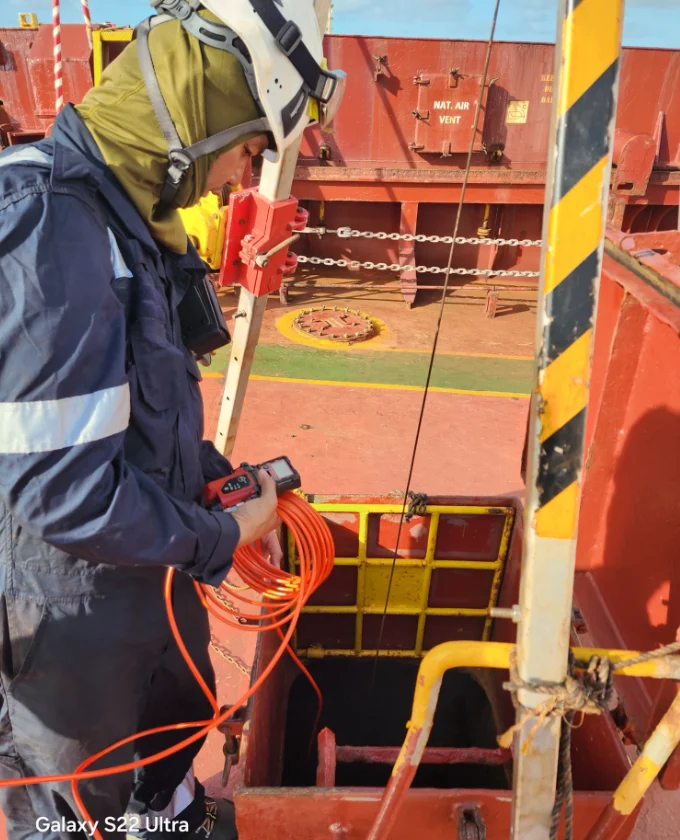
Checking of gases
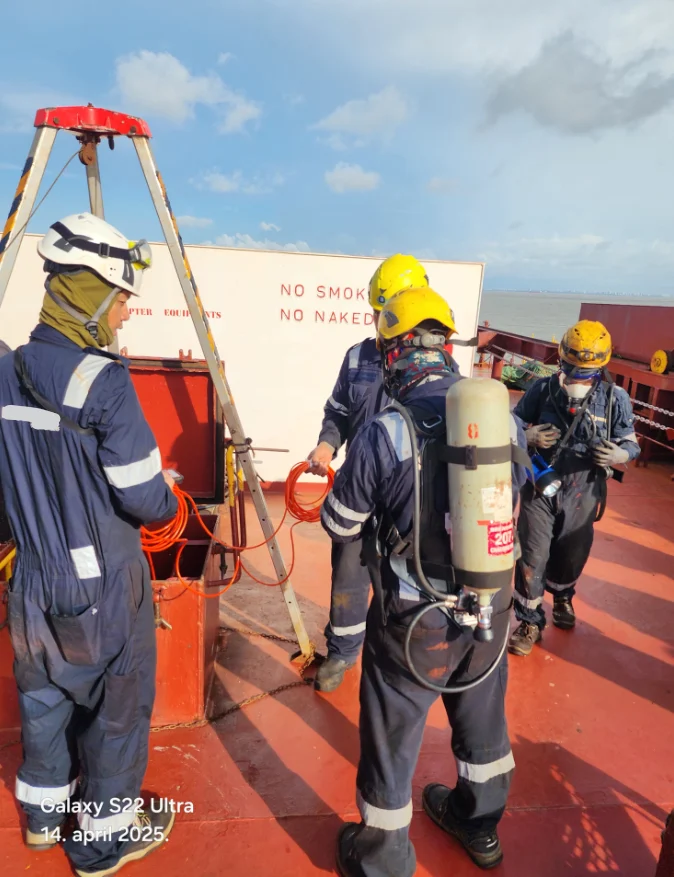
Preparing for entry wearing the SCBA
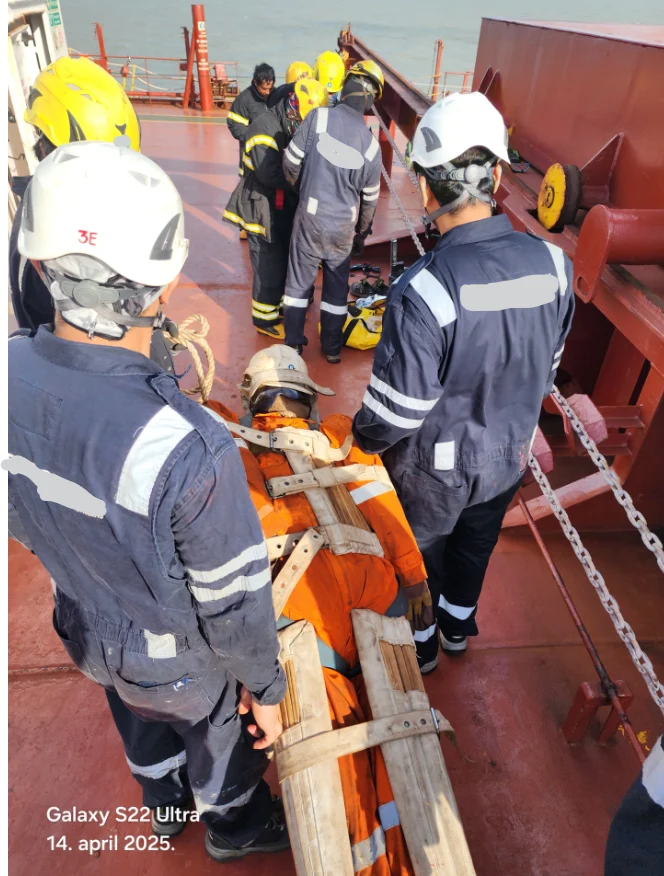
Rescue and first aid