
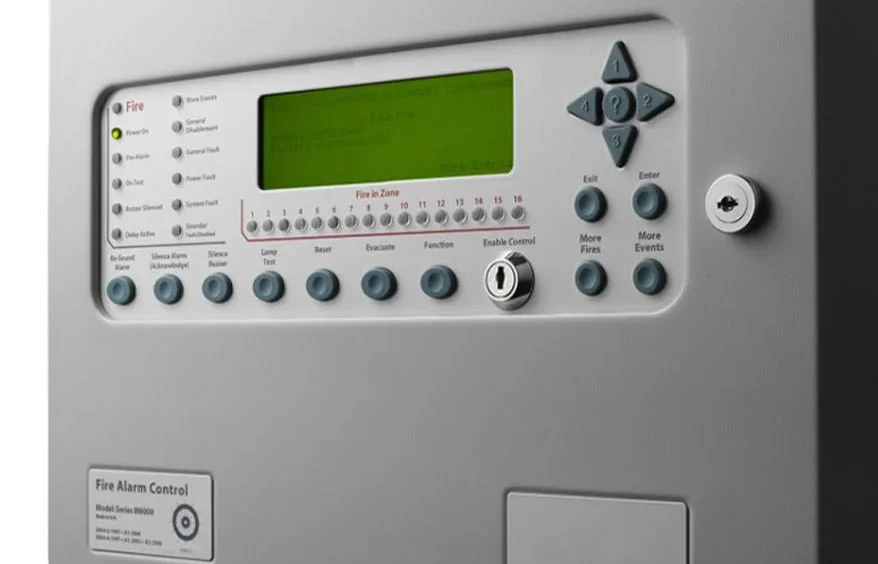
Onboard any ship, safety is not just a department, it is a culture. And one piece of equipment that often quietly watches over this culture is the fire alarm panel. Located usually on the bridge, ECR or CCR, this panel is the brain of the ship’s fire detection system. It does not just detect fire or smoke, it tells you where exactly the danger is and demands an immediate response.
In this blog, let us understand the use, importance, and checks of the fire alarm panel on ships, based on real-life shipboard scenarios.
What is a Ship Fire Alarm Panel
A ship’s fire alarm panel is the ship’s central control unit of its fire alarm and detection system. It keeps an eye on different zones throughout the ship, such as accommodation, engine room, cargo space, galley, and electrical areas.
It constantly gets signals from smoke detectors, heat detectors, manual call points, and beam detectors. When any of them sense abnormal heat or smoke, the panel triggers an audible and visual alarm. It also informs you which zone or detector has done so.
Location of the Fire Alarm Panel
On most ships, the main fire alarm panel is located on the bridge. Repeater panels are commonly found in the ECR or CCR and sometimes at emergency control stations or fire lockers. It is important for all officers to know the exact location of the main and repeater panels, and how to operate them.
Types of Fire Detection Sensors Connected to the Panel
- Smoke Detectors – installed in accommodation areas, galley, corridors, wheelhouse
- Heat Detectors – mostly in machinery spaces, pump rooms, and galley
- Flame Detectors – found in engine rooms and paint lockers
- Beam Detectors – for large open spaces like stores and engine room tops
- Manual Call Points – red push button type alarm points for manual activation
How Does It Work
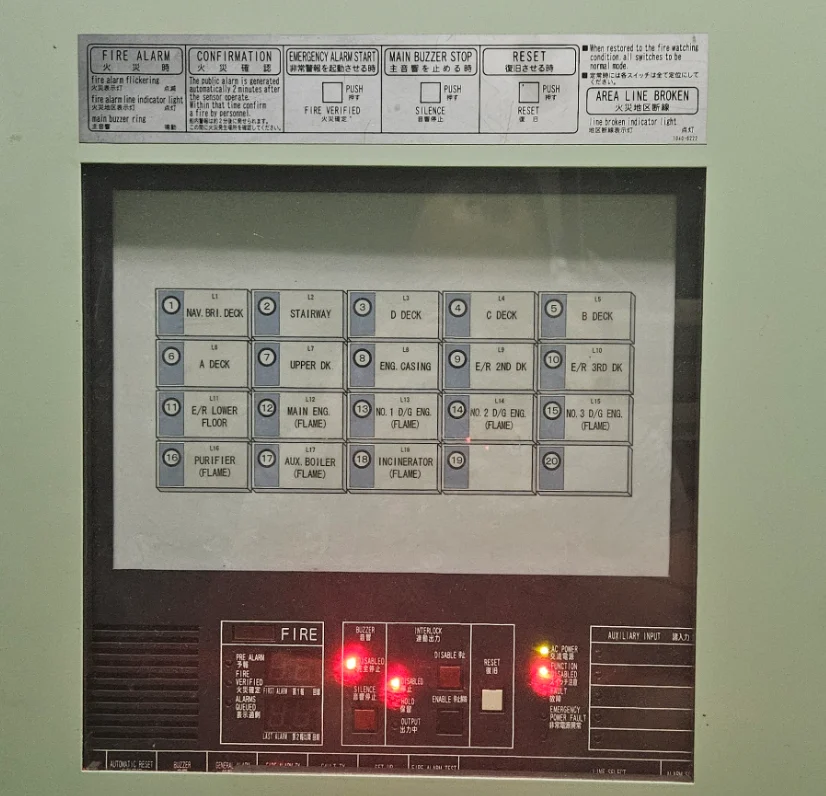
Every sensor is connected to a specific zone. When a detector gets activated, the panel sounds an alarm and displays the zone and detector number. It may show an address like Zone 06, Detector 15, indicating, say, ECR port side near switchboard.
The alarm panel may also differentiate between fault, fire, or isolated zone. Officers must be trained to understand these messages instantly, especially during emergencies.
Why Is It So Important
The panel helps detect the fire in its initial stage, sometimes even before flames appear. In a closed steel environment like a ship, a few seconds of delay can lead to a full-blown fire. This panel is your early warning system, your first line of defence.
Daily Checks of Fire Alarm Panel
- Check for any visual indicators like fault, trouble, or isolated zones
- Ensure power supply to the panel is active
- Check communication with all zones is okay
- Confirm printer roll is available if your system logs alarms
- Log any past alarms or faults noted during the last watch
Weekly and Monthly Checks
- Conduct test alarms using manual call points
- Isolate and re-enable detectors zone by zone to ensure proper reset
- Carry out system checks with ETO or electrician
- Record test results in the fire detection log book or PMS system
Common Issues Observed
- Dusty or oily detectors giving false alarms
- Disconnected detectors during maintenance, left isolated
- Power failure on standby battery supply
- Crew not trained in muting or acknowledging the panel properly
All of the above can turn deadly during a real emergency. Hence regular awareness is key.
Training and Familiarisation
During every onboard safety drill, officers and crew must be shown how to:
Identify the source of alarm from the fire panel
Acknowledge and mute the alarm
Isolate zones in case of maintenance
React to real fire indications immediately
Remember, delays in response are mostly due to confusion at the fire panel.
Final Thoughts
The fire alarm panel may seem like a dull grey box with blinking lights and beeping sounds. But that box holds the power to save the entire ship and its crew. Treat it with respect. Train your juniors. And always keep it alive, updated, and tested. Because at sea, when fire breaks out, seconds are everything.
Below is a picture of an onboard fire alarm panel of a bulk carrier bridge and the various zones numbered accordingly. (To be used only for educational purposes)