

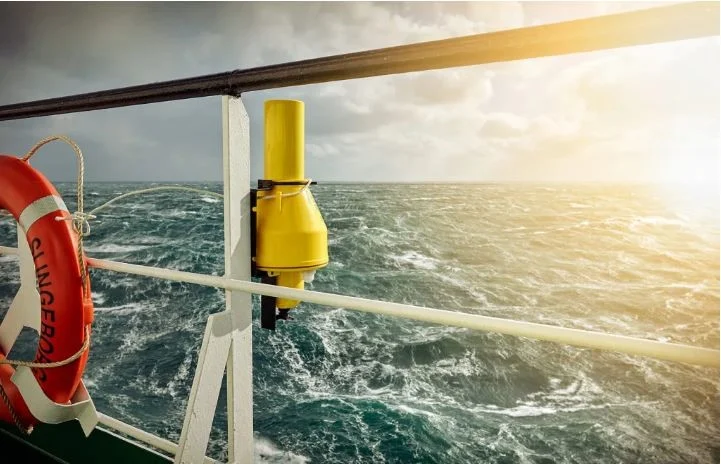
What Every Deck Officer Must Know
Onboard any seagoing vessel, the bridge is not just the nerve centre for navigation and communication – it is also a critical safety zone. Among its many emergency tools and systems, one category stands out during distress situations – pyrotechnics.
Often locked away and forgotten until a drill or inspection, bridge pyrotechnics are your last visual call for help when all else fails. Every officer must not only know where these are, but how they work, what they are meant for, and how to keep them compliant and ready.
This blog breaks it all down – practical, real, and for seafarers like you.
An Overview of Pyrotechnics
Pyrotechnics, briefly defined as distress signals that create the illumination of light, smoke or both, can be used to help alert nearby ships, airplanes or shore authorities of distress. Pyrotechnics do not function like GMDSS or EPIRBs because they provide visual confirmation the vessel is in distress and require nothing but the pyrotechnics to alert the vessel in distress.
Why Are Pyrotechnics Kept on the Bridge
The bridge team is the first to respond to any emergency. Having pyrotechnics within arm’s reach during a distress situation ensures no time is lost. If communication equipment fails, or if a situation escalates rapidly, bridge pyrotechnics provide a backup distress signaling method that works without power, radio, or satellite.
Where Are They Stored
Pyrotechnics on the bridge are usually stowed in an approved watertight container, placed near the navigating officer’s chair or on the bridge wing, depending on ship design. The storage box must be clearly marked, secured against weather and tampering, and should only contain approved items.
This box should be immediately accessible and included in the safety equipment plan onboard.
Types of Pyrotechnics on the Bridge
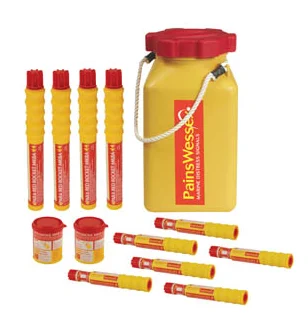
Under SOLAS Chapter III and the LSA Code, the minimum requirement for bridge pyrotechnics includes:
- One. Red Hand Flares
Produces a bright red flame for at least one minute
Used to signal position at night or during low visibility
Easily held in hand, activated by pulling a trigger or cord
Should be visible for up to 5 nautical miles
- Two Parachute Red Rockets
Launches vertically and bursts high in the air with a red flare
Visible up to 30 to 40 nautical miles in clear weather
Altitude: Minimum 300 metres
Burn time: Minimum 40 seconds
Very effective for long-distance alerting
Three. Buoyant Smoke Signals
(Mostly in lifeboats and life rafts, but sometimes spare units are stored near the bridge)
Creates dense orange smoke for daytime distress signaling
Burn time: Minimum 3 minutes
Ideal for visual marking from the air or by rescue boats
On the bridge, usually only red hand flares and parachute rockets are kept in the dedicated container. Smoke signals are standard in lifeboats and life rafts.
Quantity Required on the Bridge
As per SOLAS, a minimum of twelve parachute red rockets are to be carried onboard. While the regulation does not specify exact bridge allocation, most safety equipment plans distribute at least:
Four to six parachute rockets
Four to six red hand flares
The rest are stored in the survival craft and other designated areas.
Inspection and Maintenance
Every officer must treat pyrotechnics like lifeboat equipment. Expired or damaged flares are a serious non-compliance. Here’s how to keep them in check:
- Monthly Checks
Ensure no item is expired
Check the integrity of the container – watertight, sealed, and secured
Verify legible markings, manufacturer details, and expiry dates
Cross-check with inventory list and safety manual
- Annual Inspections
Included in safety equipment annual service
Often checked during annual flag inspections and audits
- After Use
Any discharged item must be logged and replaced immediately
Master must be informed and requisition raised for replenishment
Always record expiry dates in the Safety Officer’s register and communicate at least six months before expiry during monthly meetings or drills.
Safety Precautions While Handling
Pyrotechnics are not toys. Improper handling can cause serious injury or fire. Officers must remember:
Do not expose to heat or sunlight
Never activate during drills unless authorised by shore authorities
Always point away from body and downwind while using
Use gloves and safety glasses where possible
Dispose of expired units through authorised disposal agents – never throw overboard or burn onboard
Logbook Entries and Documentation
Record inspection dates in the bridge checklist
Maintain a clear inventory with expiry dates
Note location of all flare boxes in the vessel’s Fire Control Plan
Update the Safety Management System manual as per any changes in storage or quantity
When to Use Bridge Pyrotechnics
Use only during genuine distress, when life is at risk, and when:
The vessel is sinking, on fire, or disabled
Communication systems have failed
Immediate assistance is required
To alert aircraft or nearby ships visually
Using pyrotechnics unnecessarily can attract fines or criminal penalties under international maritime law.
Final Words
Pyrotechnics may be stored quietly in a small box on the bridge, but their role in maritime safety is anything but small. Every officer must respect, understand, and regularly inspect them. Because when nothing else works, and all systems fail, these little tubes of light could be your last message to the world.
Keep them ready. Know how to use them. And never underestimate their power.
Note: This photo is only used for educational purposes.