

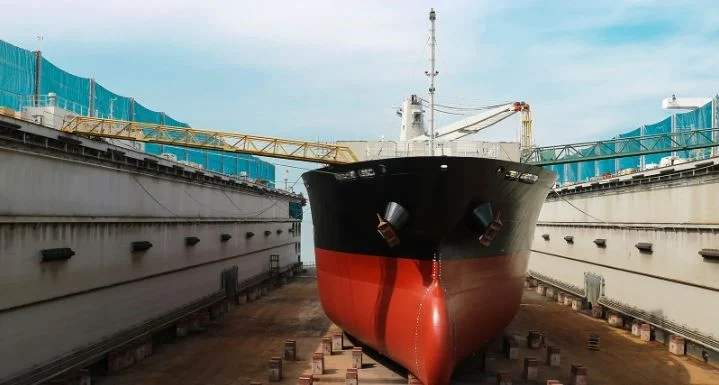
Dry docking is not just a shipyard pitstop — it’s an entire lifecycle event in the life of a ship. It’s the time where we get under the skin of the vessel, breathe new life into her hull, machinery, systems, and surveys, and prepare her for years of safe sailing.
This blog combines seagoing insight with a complete dry docking checklist used onboard, making it one of the most comprehensive guides you’ll ever find.
What Is Dry Docking?
Dry docking is the act of taking the ship out of water for repair, inspection, or maintenance. It’s a major technical operation where the hull, propeller, rudder, and underwater fittings are cleaned, overhauled, and surveyed — all under the watchful eye of class and flag.
Section 1: Before Arrival at Shipyard
Before entering any dry dock, preparation is key. Here’s what must happen:
Pre-Arrival Checklist
Opening meeting between Master, Chief Engineer, and ship staff to align on itinerary.
Repair specifications finalised and cross-checked.
Draft and propeller immersion confirmed. If transiting with partially exposed propeller, ensure speed per RPM/draft curve.
Past incidents and dry dock lessons shared across the fleet.
Watchkeeping & safety rounds planned.
Empowerment of crew — every member must feel confident to stop unsafe work.
Photographic records of critical work and conditions.
Highlighting/marking of items for repair.
Spare parts & supplies arranged in advance.
Sludge/oily water and grey water tanks discharged — minimal ROB.
Brass fittings removed and tools secured in storerooms.
This stage is all about readiness and safety.
Section 2: Upon Arrival at Dry Dock
Once berthed at the yard, several joint activities begin:
Safety and Coordination Meetings
Kick-off meeting with dry dock superintendent and yard team.
Yard safety orientation and emergency procedures (muster points, drills, firefighting standby).
Emergency contact details and fire watch patrols.
Clear and safe access routes, walkways, gangways, staging.
Critical Systems Oversight
Disablement of fixed firefighting systems under supervision.
Permit-to-Work for all hot work, electrical, scaffoldings, and enclosed space entries.
Safe liquid transfer (ballast, fuel, slops) as per MARPOL and yard plan.
Electrical work only under strict lock-out/tag-out control.
Pressurised pipework and hazardous systems handled with full PPE and checks.
Lifting gear inspected and operated only by certified crew.
All daily safety meetings, progress reviews, and testing plans agreed.
From this point, safety becomes a live operation.
Section 3: Prior to Docking (Before the Dock Is Pumped Dry)
Now comes the most technically critical stage:
Ballast and Draft
Docking ballast condition prepared, drafts verified.
All ballast tanks sounded, entries recorded in the deck logbook.
Compare yard block plan with the ship’s docking plan.
Systems and Stability
Sea water cooling system supply checked.
Emergency generator tested.
Docking manoeuvre planned with dockmaster/pilot.
Ensure crew safety — remove/reinstall gratings or walkways for mooring access.
Section 4: Undocking Procedures
Once all shipyard work is completed and verified by class and company, we prepare to flood and undock.
- Before Flooding the Dock
Stability and ballast restored to docking condition.
All tanks sounded and logged.
Plugs on bottom/rudder/duct secured, vacuum tested, cemented.
Sea chests and overboard valves closed and checked.
Gratings locked, vent valves opened, rope guard and ICCP cleared of grease.
Propeller shaft earthing, anchors secured, mooring lines arranged.
Manholes boxed, cranes secured, loose items removed.
Main/emergency air bottles pressurized, emergency generator on standby.
Communication checks between Bridge, Engine Room, and Mooring Stations.
Final handover to Dock Master for flooding commencement.
- After Flooding the Dock
All tanks and hulls checked for leakage.
Sea chests vented, cooling water supply confirmed.
Switch to ship’s power, test main engine and steering.
Bridge and machinery equipment tested, blackout drills done.
All personnel cleared, timings logged.
Section 5: Departure from the Yard
This section is often overlooked but is critically important.
5.1 Certification & Documentation
New certificates and test records onboard.
VGP updates (NOI, antifouling, hull cleanings, tank changes).
Class and ESP reports, measurement and calibration records received.
Biofouling log updated.
5.2 Safety Equipment
General and fire alarms, whistles, lifeboats, and all FFA/LSSA gear tested.
Fire pumps, detectors, and fixed systems reactivated.
Emergency lighting confirmed throughout the vessel.
5.3 Pollution Prevention
Environmental seals, SOPEP tools, OWS checks done.
Slops, garbage, and oily mixtures disposed of with receipts.
Overboard valves sealed, bilge valves closed and secured.
5.4 Bridge Equipment
All navigational aids, GMDSS, echo sounders, and compasses tested.
Port pre-departure checklist completed.
5.5 Deck Readiness
Chain lockers, tanks, vents, cargo holds secured.
Cranes, windlass, winches, ladders, and WIAS tested.
Security check done and logged.
Cargo hold bilges cleaned, to be tested post-departure.
5.6 Engine Room Systems
Alarm systems, emergency shutdowns, and DMS tested.
Bilge alarms, overfill protections, stern tube seals and L.O. systems confirmed.
Main and auxiliary engines, generators, and boilers tested.
All yard leftovers removed, ICCP to be kept off for 15 days.
Port departure checklist completed.
Section 6: Drydock Feedback and Review
Post-docking evaluation is essential for learning and accountability:
Did the drydock go as planned? Timeframe? Retrofits?
Were safety, hot work, permits, and fire patrols up to standard?
Was environmental compliance met? Waste disposed properly?
Was workmanship acceptable? Any poor repairs?
Were systems tested and verified after servicing?
Are regulatory documents and certificates all present?
Final Thoughts
From the first opening meeting to the last draught check, dry docking is a highly coordinated team effort between ship, shore, class, and shipyard.
If you’re a Master, Chief Engineer, Superintendent, or a Cadet learning the ropes — the checklist shared here is your blueprint. Follow it step by step, never assume safety, and lead your crew confidently through each phase