

- Introduction
Regardless of whether you need what is a liferaft, liferaft use at sea, or how to launch liferaft procedures, this guide has everything in one place. This blog has been composed for deck officers, cadets, and safety personnel, and it meets a balance between SEO exposure and useful information regarding maritime scenarios.
- What is a liferaft and why would you want to use one?
A liferaft is an inflatable survival boat that gives a route to emergency escape. When any ship is in danger or has sunk, personnel will make their way to the liferaft, inflate the liferaft, and it will give protection, floatation, and equipment which includes, water, food, first aid, pyrotechnics, and a sea anchor.
According to SOLAS all seagoing ships are required to carry a liferaft, and liferafts are the basis of a survival strategy when a lifeboat is not usable or not available.
- Liferaft Location on Board: Strategic Stowage
Knowing liferaft location onboard is crucial for fast response.
Liferafts are usually stowed:
On both sides of the ship near muster stations
Near lifeboat stations
On upper decks or accommodation deck, always within reach of the crew
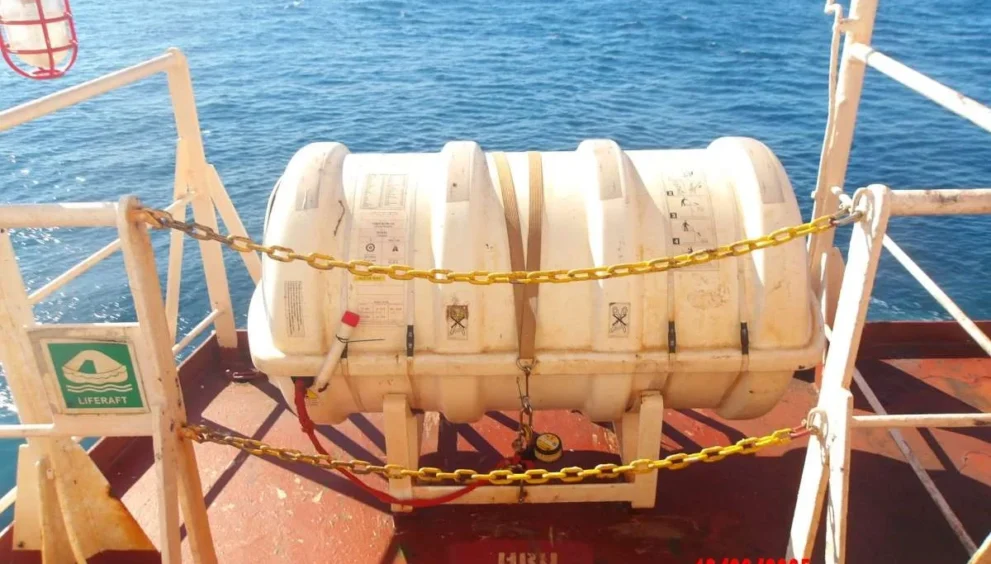
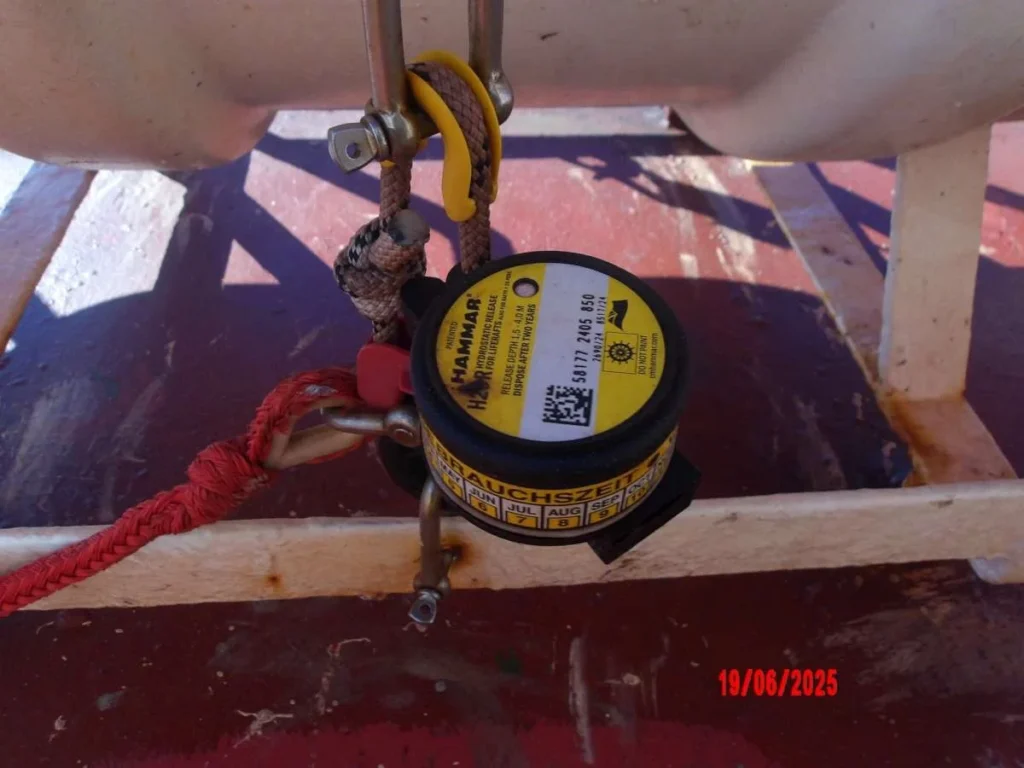
Stowage vessels may be canvas valises or rigid fiberglass canisters mounted on cradle systems with hydrostatic release units (HRUs) fitted as per regulations.
- Launching Liferaft Procedures
Launching liferaft procedures vary depending on type:
Throw-overboard Liferafts
Remove securing straps and safety pin
Throw the canister overboard
Pull the painter line sharply—this triggers gas cylinder inflation and inflates the raft in water
Use the painter as a lifeline to climb aboard
Davit-Launched Liferafts (if fitted)
Cradle lifted with davit arm
Pull painter to inflate onboard
Board in sequence, then lower to water using brake release or remote handle
Always rehearse both during drills, clearly assigning roles like painter puller and boarding order.
- Liferaft Maintenance and Inspection
Liferaft maintenance requirements include:
Annual servicing by certified service stations per SOLAS and ISO standards
At year five or ten, more thorough tests like NAP (non-absorbent polyethylene), floor seam, working pressure, and gas cylinder hydraulic pressure tests for continued certification
Onboard visual checks by officers for container damage, expiry, rust on cradle, securing straps, painter condition, and accessible stowage location
Also, check emergency pack contents—rations, flares, first aid supplies—and ensure they are within validity .
- Detailed Liferaft Use Case: Boarding, Signalling, Survival
When the liferaft inflates, survivors may board from water or deck. Look for quick-access ladders and grablines inside. Use the sea anchor to maintain stability in rough sea conditions .
Signalling procedures include using rocket parachute flares, hand flares, smoke signals, whistle, mirror, torch, and radar reflector included in the emergency pack .
- Choosing the Right Liferaft: Capacity, Standards, and Use
If you’re wondering how to match liferaft capacity to crew size, rule is simple: capacity must be equal to or exceed total persons onboard. For seven persons you need an eight person raft, not a six-person unit .
Ensure it’s SOLAS certified, depending on vessel type and trading area .
Choose raft pack type based on voyage duration: 24-hour pack for short passages or multi-day survival pack for extended offshore voyages .
- Summary and Final Advice
Understand what a liferaft is and why its use matters in emergencies
Always know location onboard, and ensure accessibility
Practice launching procedures during drills
Maintain liferafts according to servicing schedules and perform regular onboard inspections
Match capacity correctly, and select the right certified pack type
Never compromise: a liferaft is more than equipment—it’s survival gear
- Final Thought
Well-maintained, strategically located, and regularly drilled liferafts form the cornerstone of survival at sea. They demand attention, respect, and preparedness from every bridge and deck team.