
A Must-Know Safety Drill for All Deck Officers
At sea, when every second matters, there is no room for weak links. One such pivotal connection in the abandon ship procedure is the embarkation ladder. Too often ignored during regular inspections, the humble ladder can be the difference between a safe evacuation and a catastrophe.
For liferafts or lifeboats, embarkation ladders are the final physical connection between the safety of the vessel and the survival equipment below floating. They are worth more than they get. All officers on board should be capable of inspecting, testing, and verifying these ladders as ready.
Step-by-step is the way to everything you need to know about inspecting lifeboat and liferaft embarkation ladders.
What Is an Embarkation Ladder
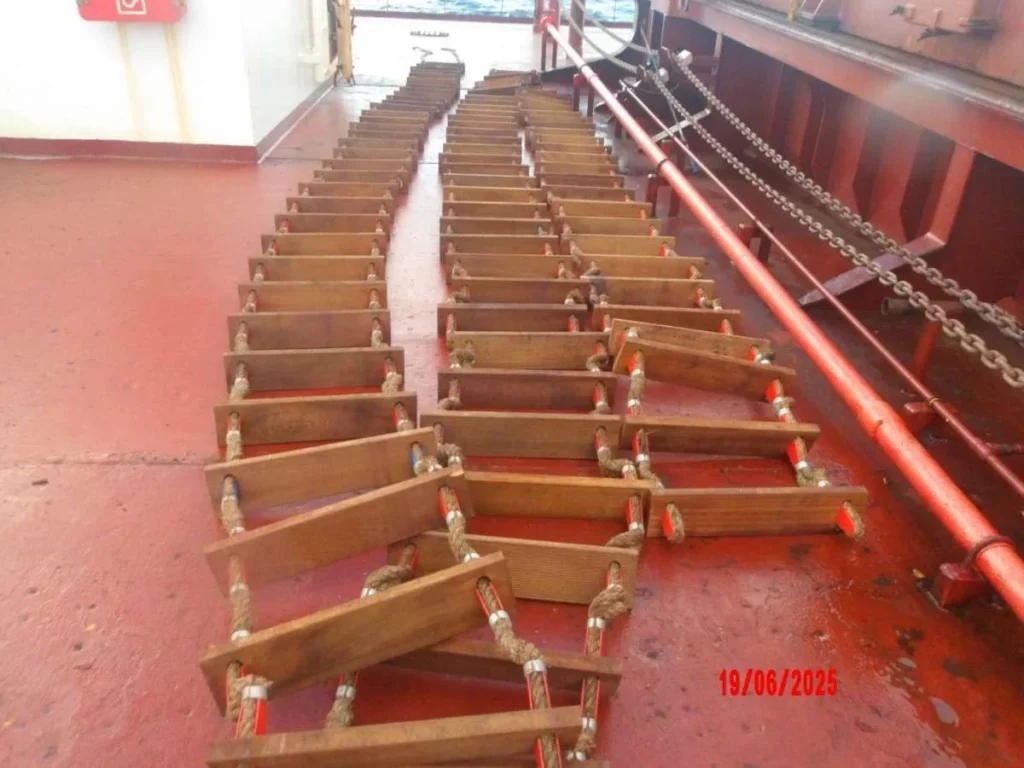
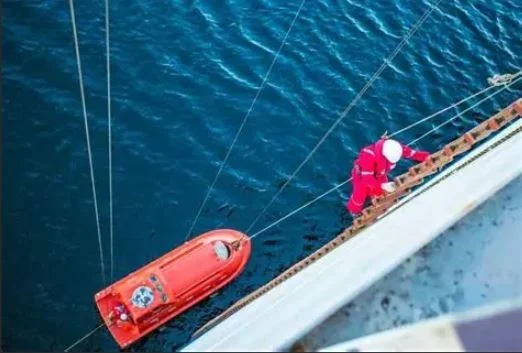
An embarkation ladder is a flat-tread rope ladder, usually made of hardwood or synthetic rubber. It is used to allow crew members to climb down the embarkation deck of the vessel to the liferaft or lifeboat floated in the waterline.
Embarkation ladders should be made available for lifeboats and liferafts according to SOLAS regulations. Even when the lifeboat is davit-launched and can be embarked at deck level, there should be a ladder in place and accessible in case the main embarkation passage is not accessible.
For liferafts, which are in most instances manually launched, the ladder is needed in order to ascend up to the floating raft after it has been inflated and deployed.
Why Are These Checks Important
More often than not, ladders are rolled up, stored, or even padlocked with unopened paint and lashings that have not been touched in years. In case of an emergency or a drill, if the ladder isn’t rigged correctly, damaged, or doesn’t reach the waterline, it may hold up evacuation, hurt crew members, or instill panic.
Failure of embarkation ladders has been present in most casualty reports, particularly when there have been drills. Officers should regard such ladders as life-saving equipment, rather than accessories.
What to Inspect – Step by Step
Here is a simple checklist that officers can use. This should be implemented during abandon ship exercises, safety inspections held monthly, and whenever lifeboat and raft stations are being inspected.
- Physical Condition of the Ladder
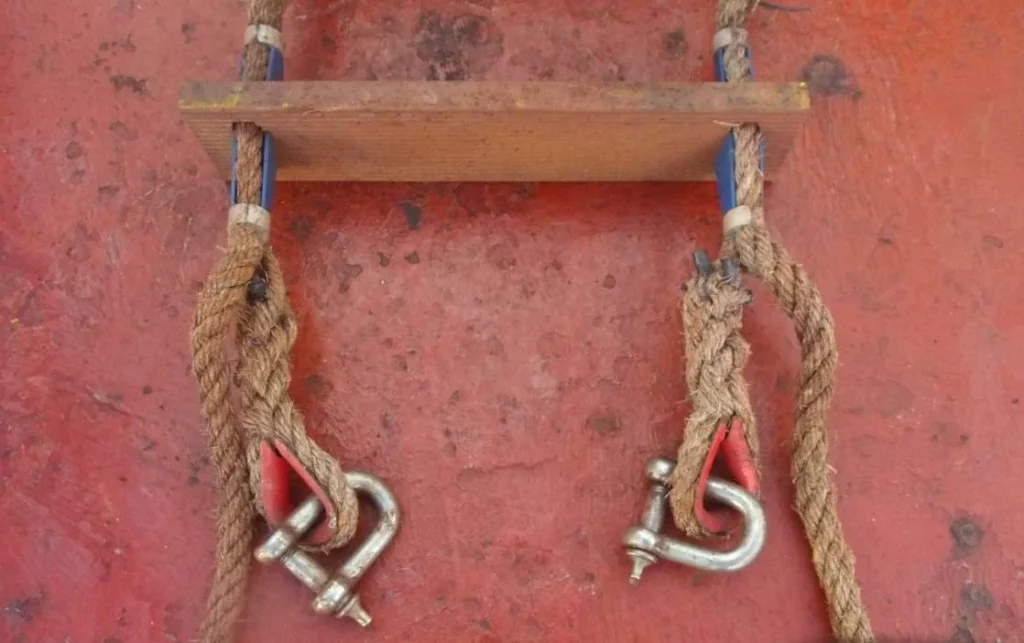
Examine every rung. Look for cracks, warping, softness, delamination, or missing steps. Wood steps should be free of rot and splinters. Rubber steps should not have excessive wear or surface peeling. The rope or synthetic side ropes should be intact, free of fraying, discoloration, or stiffness.
- Securing Points
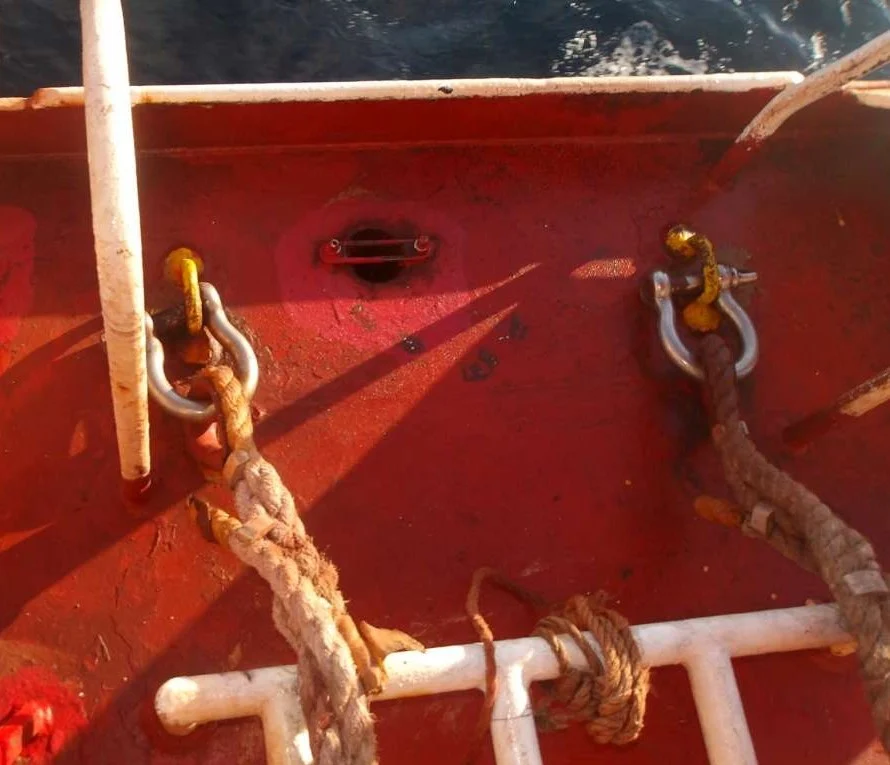
Ensure that the ladder is secured correctly to good anchor points on deck. Never lash with temporary tie-downs or tie to rails. Search for purpose-made pad eyes or good deck fittings. The securing system has to be able to take the weight of multiple crew members boarding in rapid succession.
- Length of the Ladder
Measure and verify that the ladder extends to the lightest seagoing draft waterline. During drills, practice launching a raft or lowering a lifeboat and visually check that the ladder gives complete access to the boat or raft.
- Stowage and Accessibility
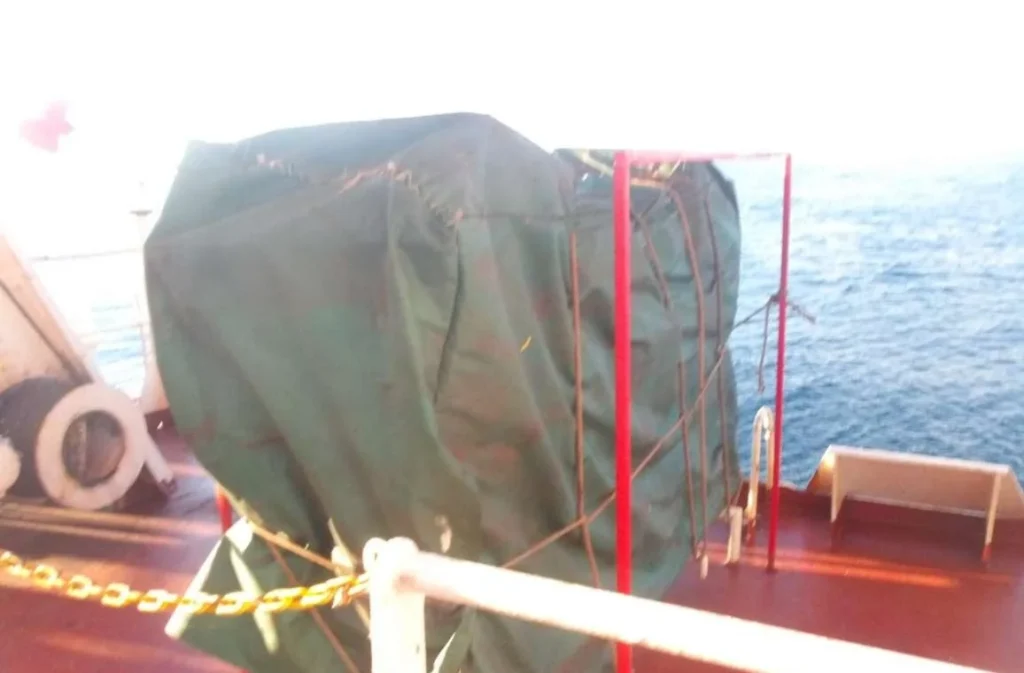
Verify the ladder is not painted, rusted solid, or held in place with additional lashings that would be difficult to cut during an emergency. It has to be able to roll out speedily, by any member of the crew, instantly. Take off and replace all cable ties, corrosion, and obstructions. Keep the ladder loose enough to roll over the side of the ship without a tool.
- Launch and Retrieval Test
Manually lower the ladder to test for smooth deployment. Observe for any snagging, twisting, or hard handling. Once checked, recover it completely and restow it in good condition. Take note of any heavy wear, cuts, or fatigue.
- Liferaft-Specific Checks
Look for ladder hooks or bridle attachment points at the liferaft embarkation station. If the ladder is to be tied up to the painter line of the raft, ensure that is tried out and familiar to the duty watch.
- Weather Deck Exposure
If the ladder is stowed outdoors, examine it more frequently. UV rays, salt spray, and heavy weather can degrade materials quickly. Replace if there is any doubt about its integrity.
Additional Best Practices for Officers
Do not assume the ladders are fine just because they look okay. Insist on regular hands-on checks.
Involve cadets and junior officers in the inspection. Let them handle the ladders, deploy them, and practice use under supervision.
Keep accurate records. Mark inspection dates on the safety checklist. Document defects or damage for filing and repair purposes.
Don’t ever be afraid to ask for a replacement if the ladder isn’t up to safety standards. Lives are at stake.
Final Thoughts
An embarkation ladder can appear to be a humble piece of equipment, but it’s one of the most critical tools on the survival station. When you’re training your crew, drilling your watches, or planning your safety equipment checklist, don’t give this ladder the short shrift it often receives.
A correctly rigged, properly maintained embarkation ladder is more than just a safety measure. It is a guarantee that all seafarers can find safety when they need it most.