

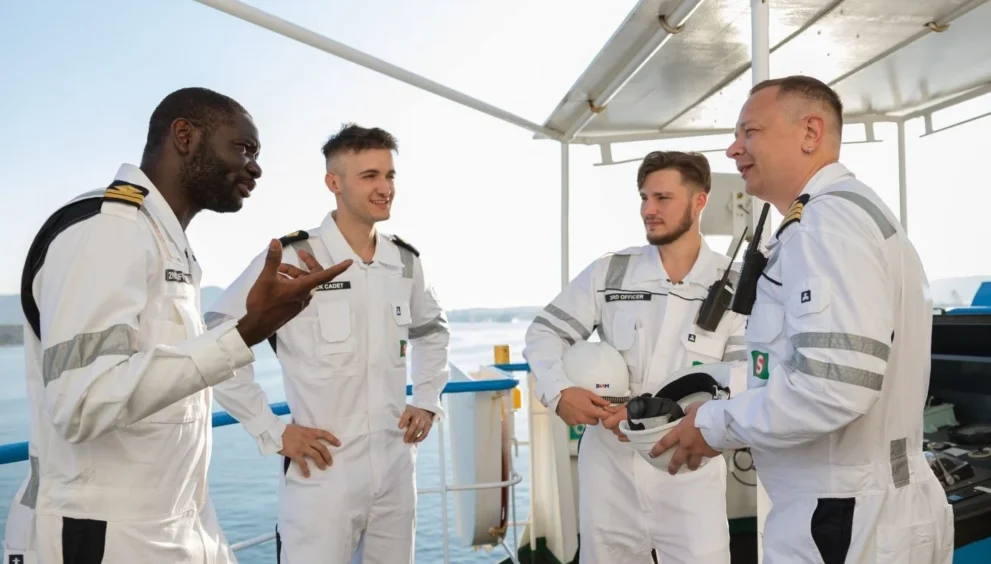
Meta description: A deep-dive guide to the shipboard Safety Officer’s purpose, duties, inspections, training, documentation, and day-to-day routines—covering appointment, safe working practices and conditions, PPE, familiarisation, safety committee work, drills, accident/near-miss management, area inspections, and records. Built from shipboard procedure requirements and written for real life at sea.
1) What the Safety Officer is for (and why the role matters)
The Safety Officer exists to keep people safe and work systematic—to make sure safe practices aren’t accidental, they’re designed and maintained. The formal objective is to specify and execute the role and responsibilities that deliver safe working conditions onboard. That means bridging policy and practice, converting procedures into habits, and closing gaps discovered in inspections, drills, and incident reviews.
Ultimate accountability: The Master is responsible to ensure this procedure is implemented. The Safety Officer leads the work; the Master owns the outcome and backs it.
2) Appointment, qualification, and identity
Appointment & record: The Safety Officer’s appointment must be recorded in the Official Logbook. Don’t skip this—auditors always check it first.
Who is appointed: The Chief Officer is designated as the ship’s Safety Officer.
Training prerequisite: Before signing on, the Chief Officer must have completed an approved Safety Officer training course (per the ship’s training matrix). Keep evidence on board.
Visible identification: When on duty outside the accommodation, the Safety Officer should wear a clearly visible identifier (title tag/badge) so crew and contractors know who to approach for safety issues.
Spirit of the job: In consultation with the shipboard management team, the Safety Officer initiates and develops safety measures on board—proactive, not reactive.
3) The four core domains of the Safety Officer’s remit
The procedure groups the role around four “safety area responsibilities.” Use these as your weekly compass.
3.1 Safe Working Practices
What it means: Review how work is actually done (not just how procedures say it’s done) and identify unsafe acts or practices.
Action: Coach, train, and correct. When you spot near misses or situations needing stop-work, escalate to the Master and discuss with the management team so the fix is real and lasting. Document the learning.
3.2 Safe Working Conditions
What it means: Inspect the workplace itself—guards, lighting, access, housekeeping, signage, slips/trips/falls controls, lock-out/tag-out readiness, etc.—to identify unsafe conditions.
Action: Conduct joint area inspections following the ship’s area safety inspection schedule. These are recurring activities in the ship’s safety/maintenance software; a full cycle covers the entire vessel within a defined period (see section 7). Increase frequency if conditions change (e.g., drydock completion, cargo change, new equipment). Escalate hazards and rectify quickly.
3.3 Safety Familiarisation
What it means: Every new joiner (and anyone transferred to new duties) receives on-board safety familiarisation within the required time frame, using the ship’s On-Board Familiarisation Checklist.
Action: Track completion, verify comprehension (not just signatures), and close gaps promptly.
3.4 Personal Protective Equipment (PPE)
What it means: Ensure adequate PPE inventory, issue a standard PPE package to all new joiners, maintain PPE catalogues/charts in mess rooms alongside the SOLAS training manual, and train crew in correct use and limitations.
Action: Audit usage and condition; replace damaged items; tailor PPE to task (hearing, respiratory, chemical, arc-flash, etc.).
Linked procedures you will use frequently: Risk Management; Safety Procedures; Personal Management Onboard; Safety Committee Meetings; On-Board Familiarisation; PPE procedure. Keep these at your fingertips.
4) Daily-to-monthly cadence for a strong safety culture
Daily
Walk a different work area each day (10–15 minutes). Ask open questions: “What could hurt you here?” Capture micro-hazards for quick fixes. Tie observations to near-miss reporting where appropriate.
Verify planned work has correct risk assessments, permits, and PPE. Coach on the spot if you see shortcuts.
Weekly
Run short toolbox talks anchored to recent near-misses or inspection findings. Keep it practical; avoid lecture mode.
Update your area inspection tracker to keep the whole-ship rotation on schedule.
Monthly / per voyage
Coordinate drills and emergency exercises (under the Master’s supervision). Debrief immediately; convert observations into corrective actions.
Prepare inputs for the safety committee meeting; ensure records are accessible to all crew.
5) “Everyone’s job”: clarifying responsibilities on board
Appointing a Safety Officer does not relieve any seafarer from the obligation to contribute to a safe workplace. Your efforts add to the daily vigilance of the whole crew—you’re a coach, facilitator, and system-builder, not the only safety “owner.” Keep reinforcing that safety is a team sport.
6) The Safety Officer’s core duties—expanded
The procedure lists specific duties. Here’s what each looks like in practice:
- Implement the ship’s Health, Safety & Security Policy on board.
Translate policy into plans, training, inspections, and behaviors. Ensure alignment between “the book” and “the deck.”
- Carry out occupational health & safety inspections; report deficiencies; ensure controls are implemented.
Don’t stop at finding hazards—verify the fix (engineering control, guard repair, signage, SOP update, training). Close the loop.
- Ensure safety committee meeting records are accessible.
Minutes shouldn’t gather dust. Post them, discuss highlights at muster/toolbox sessions, and track action items to closure.
- Coordinate safety training and emergency exercises (under Master).
Vary scenarios (fire, enclosed space rescue, steering gear failure, spill, abandon ship). Focus on communication clarity and role rehearsal.
- Accident prevention, reporting, and investigation (under Master).
Promote near-miss culture—small signals prevent big losses. For incidents, lead fact-finding, root-cause analysis, and corrective actions with due respect and no blame hunting.
- Investigate on request by the safety committee, including occupational complaints.
Treat complaints seriously. Document interviews, conditions, and evidence. Revisit after fixes to confirm effectiveness.
- Ensure area safety inspections cover the whole vessel in rotation.
Plan the rotation (see section 7). Mix departments to jointly inspect, building shared ownership.
- Ensure on-signing crew and reassigned crew are familiarised in safety and environmental protection duties.
Use the formal checklist, then verify via spot questions or practical walk-throughs.
- Ensure the PPE procedure is implemented for all tasks.
Check selection, fit, condition, and training. Replace and re-fit proactively.
7) Area Safety Inspections—how to run the program end-to-end
Purpose: Build awareness and a reporting habit for unsafe conditions/acts; find issues before they find you.
Scope & schedule:
Inspections are rotational, covering the entire vessel on a cycle controlled as recurring activities in the ship’s safety/maintenance software. A full cycle is defined in the program (your procedure references a cycle length—ensure your onboard plan matches the latest ship policy).
The documentation contains two cycle references (a 4-month cycle in one section and a 3-month whole-vessel coverage in another). Adopt the stricter cadence your ship follows and document it clearly in your inspection plan.
Who inspects:
The Safety Officer designates relevant officers for specific areas and conducts the inspection jointly with the designated officer—two sets of eyes.
Exclusions:
Scheduled area-inspection activities cover all areas except designated enclosed spaces (which require separate entry/permit processes).
Recording & retention:
Mark inspections completed in the relevant recurring activity.
Keep inspection records for 3 years on board; they must be available for inspection.
What good looks like—an inspection template (practical cues):
- Access/egress: ladders, handrails, non-slip, clear walkways
- Housekeeping: stowage, spill control, waste bins, lighting
- Machine guarding: intact, locked, tagged
- Energy isolation: lock-out points, tags, test-for-dead procedure visible
- Chemical safety: SDS availability, labeling, PPE match, ventilation
- Fire safety: extinguishers charged, hydrants tested, detection/alarm intact
- Lifting gear: SWL markings, certificates, condition, correct storage
- Electrical: cable condition, panel covers, RCDs, earth bonding
- Environmental: drip trays, scuppers, garbage segregation, oil spill kits
- Signs/posters: relevant, legible, language appropriate
- PPE: availability, use, and fit for tasks observed
- Tie findings to risk assessments and corrective actions; re-inspect closed items within 30 days to confirm effectiveness.
8) Safety familiarisation—making day one count
Time-bound requirement: Carry out on-board safety familiarisation for every new crew member within the specified time frame, using the official On-Board Familiarisation Checklist.
What to cover (beyond signatures):
Muster list roles; alarm signals; escape routes
PPE issue, storage, inspection, and limitations
Hot work, enclosed spaces, electrical safety, permits
Manual handling & ergonomics
Environmental protection basics and spill response
Reporting lines for hazards, near misses, and welfare concerns
Close the loop by verifying understanding (quick Q&A or short practical demo).
9) PPE—inventory, issuance, training, and culture
Inventory control: Maintain sufficient stock of task-specific PPE (eye/face, hearing, respiratory, hand, foot, fall protection, arc-rated clothing where applicable). Inspect and rotate stock to avoid degradation.
Issuance: Provide a standard PPE package to all new joiners at sign-on; adjust for role (engine, deck, galley).
Training: Everyone must be trained in correct PPE use (fit, maintenance, change-out schedules, limitations). Keep PPE charts/catalogues posted in mess rooms with the SOLAS training manual for quick reference.
Coaching tip: When you see incorrect PPE, correct privately and explain why—build compliance through respect, not fear.
10) Drills, training, and emergency readiness
Under the Master’s supervision, the Safety Officer coordinates safety training and emergency exercises. Rotate scenarios, include night conditions when feasible, and drill cross-department coordination. After each drill:
Debrief (what went well, what to fix)
Assign corrective actions with owners and deadlines
Record and make the records accessible to all crew (valuable learning bank)
11) Near misses, stop-work, accidents, and investigations
Near misses: Treat them like gifts—free lessons without harm. Encourage reporting, appreciate candor, and fix system causes, not just symptoms.
Stop-work: If anyone calls a stop, support them. Investigate respectfully; address pressure contributors that created the unsafe momentum.
Accidents/incidents: Under the Master’s supervision, report and investigate, document root causes, and verify corrective/preventive actions. Re-brief the crew so learning spreads beyond the immediate team.
Occupational complaints: When the safety committee asks, investigate complaints with care and confidentiality; report outcomes and follow-ups.
12) Safety committee—make it the ship’s learning engine
Before the meeting: Compile inspection trends, near-miss themes, drill takeaways, and overdue actions.
During: Focus on decisions and owners, not just discussion.
After: Publish minutes where crew can see them. Use toolbox talks to cascade key points. The Safety Officer ensures records remain accessible for everyone.
13) Documentation that proves you’re doing the work
Keep these always current and ready for inspection (digital or hard copy):
Official Logbook entry of appointment
Training records (including Safety Officer course and familiarisation checklists)
Area safety inspection schedule, completed checklists, and 3-year record archive
Safety committee meeting records and action tracker
Drill plans, debriefs, and corrective action logs
PPE inventory, issue logs, and training records; posted PPE charts
14) External references you’ll anchor to
Your safety work aligns with recognised publications, notably the Code of Safe Working Practice for Merchant Seafarers (plus shipboard checklists for safety inspections, familiarisation, and PPE). Keep these referenced documents reachable in the safety folder and training room.
15) A 90-day action plan for a newly appointed Safety Officer
Days 1–7: Establish foundations
Logbook: confirm appointment entry is made.
Verify training certification is on file.
Walkthrough of all inspection areas; map current cycle status and backlog.
Check PPE inventory levels, catalogue visibility, and issue packs for new joiners.
Review last safety committee minutes; close obvious overdues.
Days 8–30: Stabilise the cycle
Restart or maintain the area safety inspection rotation to align with the ship’s 3–4 month full-coverage requirement.
Run two drills (one routine, one challenging), publish learnings.
Standardise toolbox-talk rhythm (15 minutes weekly).
Kick off near-miss campaign—simple reporting, quick feedback.
Days 31–60: Drive improvements
Trend inspection findings; attack top repeat hazards with engineering fixes.
Review familiarisation quality—sample 5 crew for comprehension.
Confirm records accessibility (committee, drills, inspections).
Days 61–90: Embed and audit
Complete one full ship inspection cycle (or be on track to complete within the stated period).
Internal mini-audit against the duties list (section 6) and fix gaps.
Prepare a quarterly safety report for the Master/management team: achievements, open risks, and next-quarter plan.
16) Common pitfalls—and how to avoid them
Paper without practice: Inspections are ticked but hazards stay unfixed. Verify completion of corrective actions.
Familiarisation as signatures: New joiners sign forms but don’t know escape routes. Test understanding.
PPE gaps: Stock present, but wrong type or poor fit. Match PPE to task and check fit.
Hidden minutes: Safety committee records exist but crew never see them. Post and brief the highlights.
Investigation theatre: Causes blamed on “human error.” Go deeper—work design, training, tools, procedures.
Cycle drift: Inspections bunch up or slip beyond the cycle. Use your recurring-activity planner and track completion weekly.
17) What auditors look for (so you’re always ready)
Evidence of appointment in the Official Logbook.
Training certificate for Safety Officer course.
A live inspection schedule with completed checklists and 3-year record.
Recent drill records with action follow-up.
Accessible safety committee minutes and action tracker.
Familiarisation files completed within the time frame.
PPE issuance and training records; posted PPE chart.
18) Quick checklists you can use today
Pre-watch safety sweep (5 minutes):
- Are walkways clear and lit?
- Are guards in place and intact?
- Are chemicals labeled and SDS reachable?
- Are LOTO devices available if needed?
- Is the right PPE being used for the current task?
New-joiner “first tour” prompts:
Show musters, alarms, escape routes.
Issue PPE; explain change-out and storage.
Show where to report a near miss and how stop-work is supported.
Confirm they can locate the SOLAS training manual and PPE chart.
After-drill debrief anchors:
What slowed us down?
Any equipment or communication failure?
Did everyone know their role?
One thing we’ll do differently next time (assign owner & deadline).
19) Closing note: safety as a system, not a slogan
A ship’s Safety Officer isn’t just “the person who cares about safety”—you’re the architect of a management system that turns caring into daily, observable practice. From logbook entries to inspection cycles, from PPE training to open near-miss culture, your consistent routines protect people and performance.
Build the routines. Keep the records. Coach the crew. And always, always close the loop.
Sources used on board
This article is based on the shipboard procedure titled “Safety Officer – Role & Responsibilities” and its referenced checklists and standards (familiarisation, PPE, safety committee, area inspections, and the Code of Safe Working Practice for Merchant Seafarers).