
Understanding, Maintaining, and Getting It Right
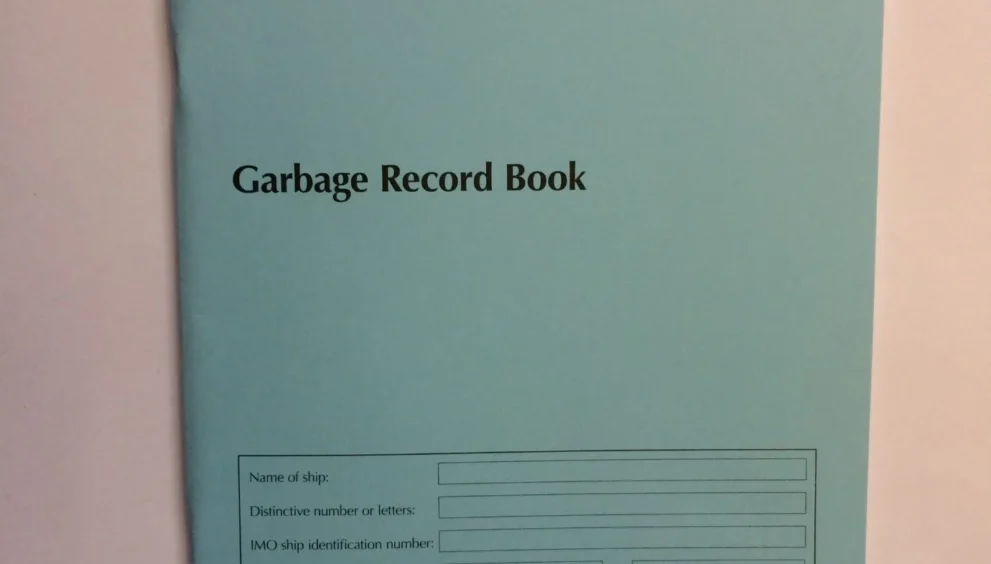
Onboard every ship, there is plenty of paperwork. But when it comes to preventing pollution, no record is more vital – and often scrutinized – than the Garbage Record Book. It’s more than just a logbook, it’s an official MARPOL record that certifies your ship disposes of garbage responsibly, legally, and according to international law.
A completed Garbage Record Book in the wrong manner can get a ship in trouble during PSC, vetting inspections, and environmental checks. So let us simplify it to the extent that each officer – from cadet to Chief Mate – will know it clearly.
What Is the Garbage Record Book
Garbage Record Book is a statutory logbook under MARPOL Annex V, which addresses prevention of pollution caused by ships’ garbage. The log has to be carried on board by all ships with 400 gross tons and above, or ships which are certified to carry over 15 persons.
It has Part I and Part II.
Part I: For all types of garbage, including plastics, food waste, domestic waste, and operational waste.
Part II: For cargo residues and cargo-related garbage specifically, typically used for bulk carriers.
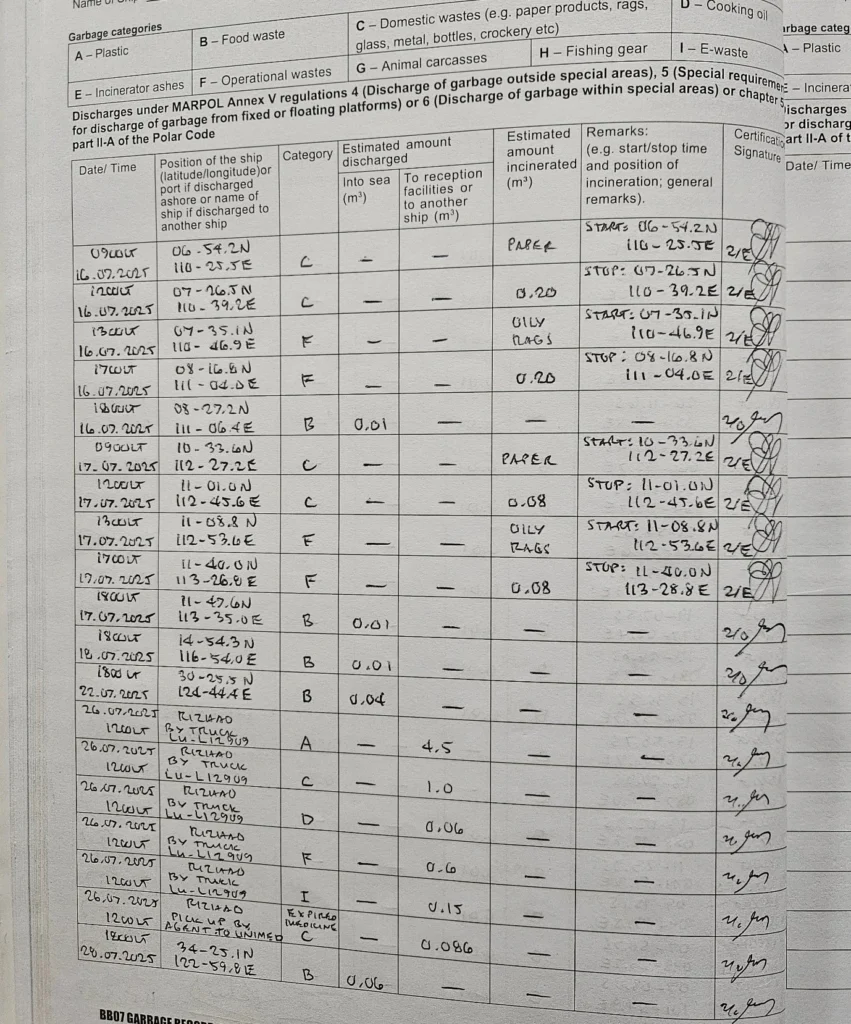
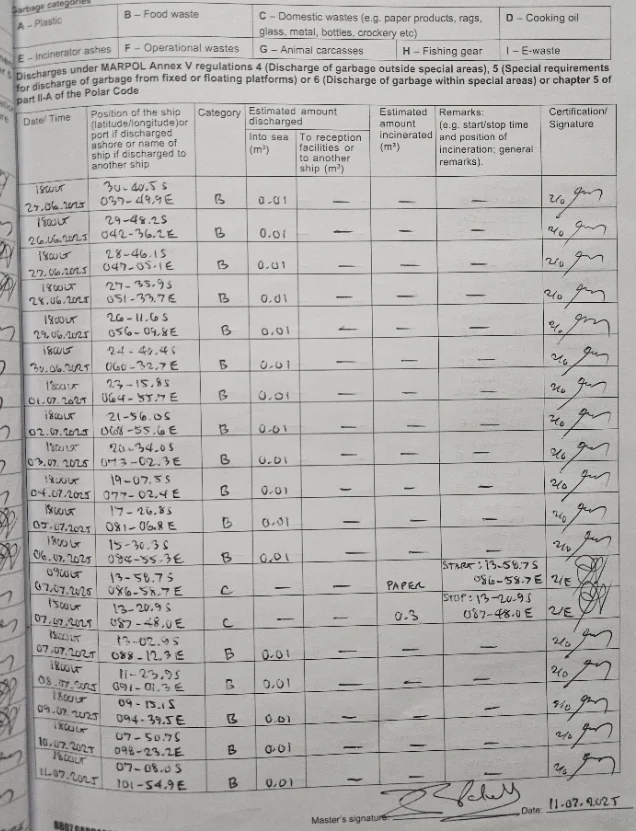
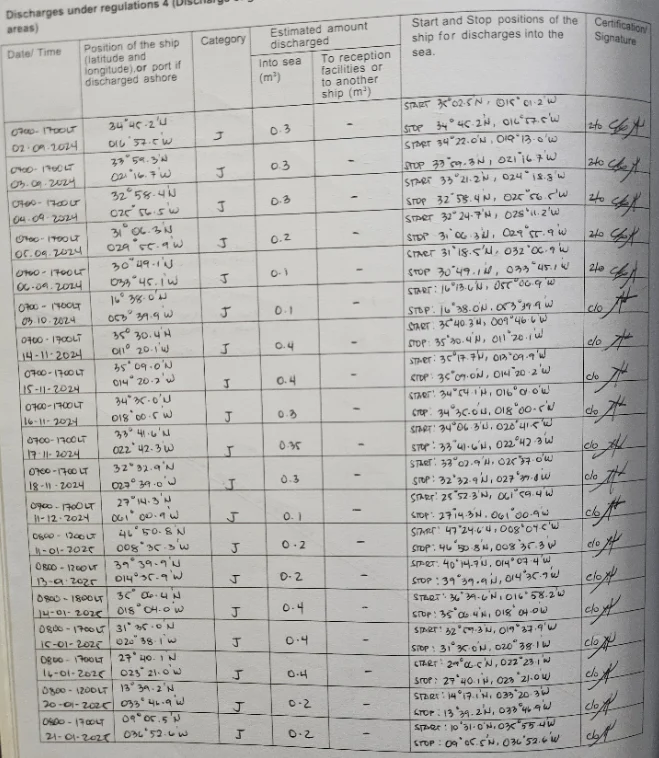
Every entry in the GRB is to be made when handling, discharging, incinerating, or disposing of garbage.
Types of Garbage Included
The MARPOL defines garbage under certain categories. These are the kinds officers are supposed to be familiar with in order to enter the correct ones.
1. Plastics
2. Food waste
3. Domestic waste
4. Cooking oil
5. Incinerator ash
6. Operational waste
7. Animal carcasses (if any, for livestock carriers)
8. Fishing equipment (for fishing ships)
9. Residues from cargo (Part II only)
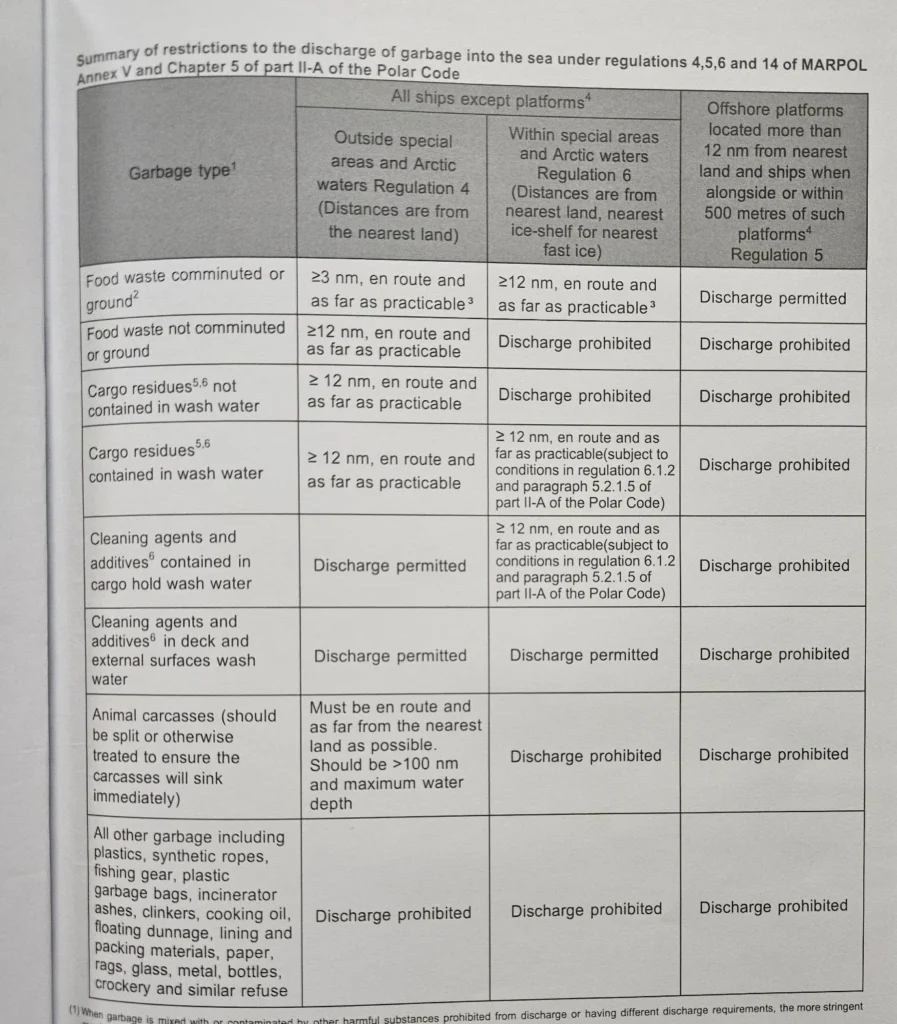
There are strict regulations on where, when, and how each category can be discharged – if it can be at all.
When to Enter in the Garbage Record Book
Each time garbage is:
- Discharged into the sea (if allowed)
- Released to a reception facility on shore
- Incinerated onboard
- Transferred to another ship
- Kept onboard
- Make the entry during or after operation. Late or back-dated entries are cause for concern.
How to Make Entries – A Step-by-Step Guide
This is what you put in a basic entry:
1. Date and Time
Note when the operation was conducted.
2. Position or Port Name
If discharging offshore, give extra from latitude to longitude. If discharging at port, note the port name.
3. Category of Garbage
Use the MARPOL code, such as A for plastics, B for food waste, etc.
4. Estimated Amount
In cubic metres. Round off sensibly, such as 0.15, 0.5, or 1.0.
5. Action Taken
Clearly state what was done. Examples:
- Discharged to port reception facility at Rotterdam
- Incinerated in ship’s incinerator
- Retained onboard in garbage room
- Discharged into the sea beyond 12 nautical miles
6. Signature
Officer in charge should sign. Chief Mate typically signs for cargo residues. Master may countersign according to company policy.
Sample Entries
Example 1 – Discharge of food waste at sea
Date: 12 August 2025
Time: 0830 UTC
Position: 23°14’N, 065°20’E
Category: B – Food waste
Estimated Amount: 0.20 cubic metres
Action Taken: Discharged into sea more than 12 nm from the nearest land
Signature: J. D’Souza, Second Officer
Example 2 – Discharge of garbage ashore
Date: 16 August 2025
Time: 1010 UTC
Port: Singapore
Category: A – Plastics, B – Food waste, C – Domestic waste
Estimated Amount: 1.20 cubic metres
Action Taken: Discharged to shore reception facility
Signature: N. Mehta, Chief Officer
Example 3 – Incineration
Date: 19 August 2025
Time: 1545 UTC
Position: 12°10’N, 074°50’E
Category: C – Domestic waste
Estimated Amount: 0.40 cubic metres
Action Taken: Incinerated in ship’s incinerator
Signature: V. Sharma, Second Officer
Common Mistakes to Avoid
Writing only “Garbage discharged” without indicating the type
Omitting positions or wrong format
Missing entries of incinerated or held garbage
Missing entries in pencil or erasable pen
Completion of pages with blank space between entries
Recording in litres as opposed to cubic metres
Always remember not to backdate or overwrite a record. If there is an error, strike through one line, mark “cancelled” and initial it.
Best Practices for Officers
Have the Garbage Record Book placed close to the Bridge or the ECR, in accordance with ship’s SMS
Make the update immediately after every garbage operation
Verify with galley, engine, and cargo departments for actual garbage produced
Keep the Garbage Record Book onboard at least two years after it is filled up
At PSC or vetting, always prepared to describe how garbage amounts are quantified and what procedure is being followed
Final Thoughts
The Garbage Record Book is more than a mundane logbook. It says much about the environmental decorum of your ship. Completing it correctly reflects the ship’s compliance culture and your professionalism as a marine officer.
Always handle it with the same gravity as the Oil Record Book or Logbook. A neatly kept GRB equals easy sailing in inspections and, more importantly, demonstrates our respect for the oceans we use.